





Spirituality
April 4, 2026


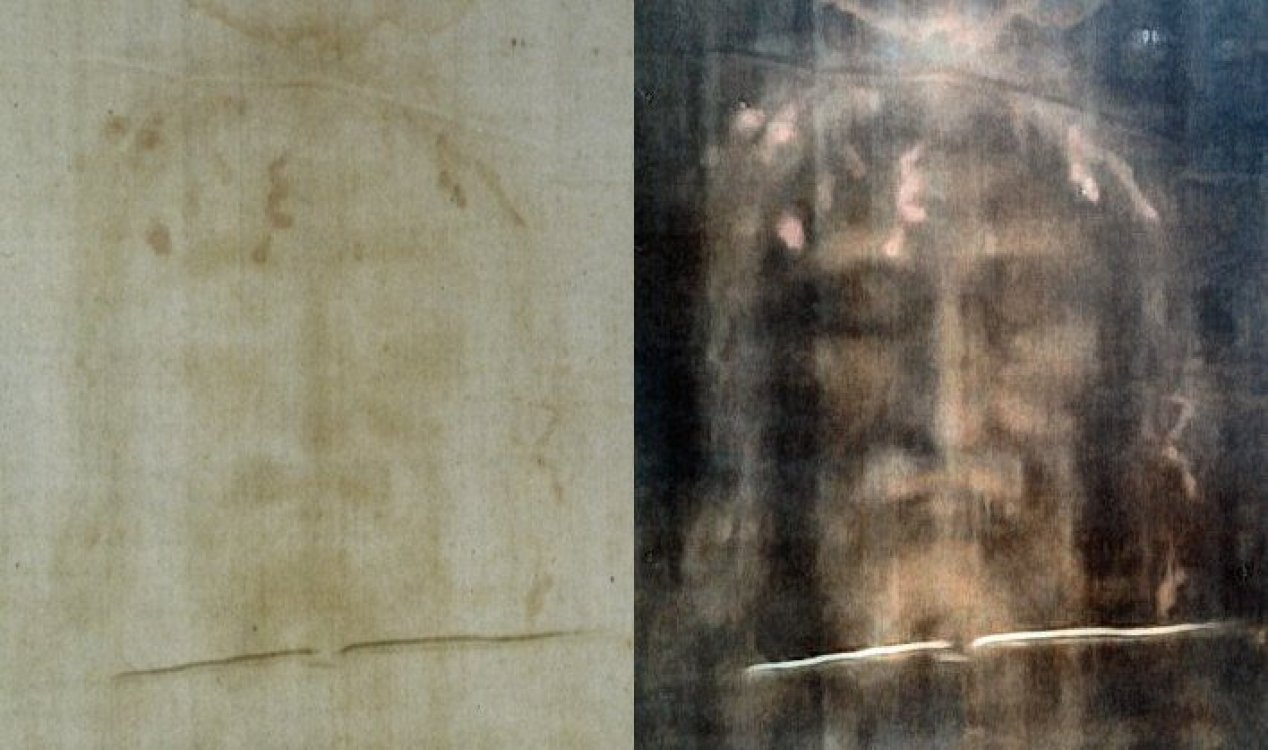
Image: Turin Shroud
Credit: CC BY-SA 3.0 / Dianelos Georgoudis
A significant number of researchers have made conflicting claims about the Shroud, with some hailing it as authentic and others suggesting that it is either a forgery or not the shroud of Jesus at all.
Back in 2015, a study headed up by Gianni Barcaccia of the University of Padova determined that the shroud may have been created in India - a controversial view at the time.
Now, Barcaccia is back - this time with the results of a new DNA analysis which show that there are traces of a vast number of different plants, animals and people from all over the world on the shroud.
While this might seem like a breakthrough, it basically means that it is pretty much impossible to tell for sure exactly where the shroud was made, who might have handled it and when.
For example, the plant DNA samples found on the relic trace back to Africa, Asia, Europe and the Americas.
In other words - the shroud has been in close contact with so many people and locations over the centuries that it is now futile trying to decipher exactly where it was when it was created.
Its true origins, it seems, may be a mystery that might never be solved.
Source: Gizmodo
New Turin Shroud study raises more questions than answers
By T.K. RandallApril 4, 2026
Image: Turin Shroud
Credit: CC BY-SA 3.0 / Dianelos Georgoudis
Renewed efforts to understand more about the origins of the famous relic have done little to solve its mysteries.
Believed by many to be the actual burial cloth of Jesus himself, the Turin Shroud - which is today situated in the Chapel of the Holy Shroud at the Cathedral of St. John the Baptist in Turin, Italy - has long been the subject of intense scrutiny, controversy and debate.
A significant number of researchers have made conflicting claims about the Shroud, with some hailing it as authentic and others suggesting that it is either a forgery or not the shroud of Jesus at all.
Back in 2015, a study headed up by Gianni Barcaccia of the University of Padova determined that the shroud may have been created in India - a controversial view at the time.
Now, Barcaccia is back - this time with the results of a new DNA analysis which show that there are traces of a vast number of different plants, animals and people from all over the world on the shroud.
For example, the plant DNA samples found on the relic trace back to Africa, Asia, Europe and the Americas.
In other words - the shroud has been in close contact with so many people and locations over the centuries that it is now futile trying to decipher exactly where it was when it was created.
Its true origins, it seems, may be a mystery that might never be solved.
Source: Gizmodo
Similar stories based on this topic:



The Unexplained Mysteries
Book of Weird News
AVAILABLE NOW
Take a walk on the weird side with this compilation of some of the weirdest stories ever to grace the pages of a newspaper.
Click here to learn more

Support us on Patreon
BONUS CONTENTFor less than the cost of a cup of coffee, you can gain access to a wide range of exclusive perks including our popular 'Lost Ghost Stories' series.
Click here to learn more

1 week
2 weeks
3 weeks
1 month


This week
This month
All time
| - | 1. | Electronic Voice Phenomenon |
 |
2. | Spirit Photography (Classic) |
| - | 3. | Pareidolia |
|
4. | Yeti |
|
5. | Roswell Incident |
|
6. | Area 51 |
 |
7. | Loch Ness Monster |
|
8. | Orb |
|
9. | Paranormal |
|
10. | Bigfoot |


Top | Home | Forum
News | Columns | Encyclopedia


UM 11.3 Unexplained-Mysteries.com (c) 2001-2026
Terms | Privacy Policy | Cookies | Contact
News | Columns | Encyclopedia
UM 11.3 Unexplained-Mysteries.com (c) 2001-2026
Terms | Privacy Policy | Cookies | Contact