





Science & Technology
September 27, 2013


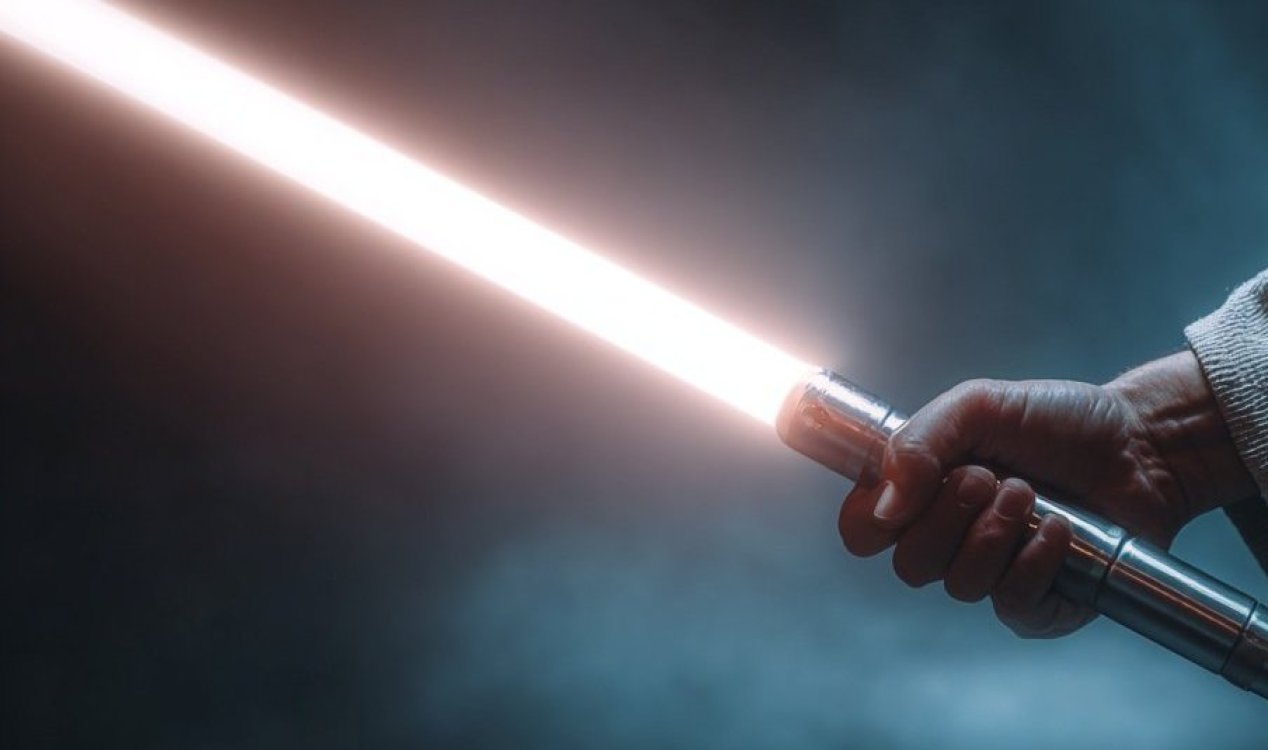
Image: AI-generated (Midjourney)
Physicists Mikhail Lukin and Vladan Vuletic however have managed to change all that by developing a way to get photons to stick together to form light molecules. The resulting 'light-matter' is similar in concept to the lightsabers in Star Wars that consist of a solid and coherent blade of light. "The physics of what's happening in these molecules is similar to what we see in the movies," said Lukin.
While it sounds promising, the concept at the moment exists only in the lab and can only be reproduced under very special conditions that exist nowhere else on Earth. Scientists believe that this technology could prove invaluable in the future development of quantum computers and that it may eventually be possible to produce entire crystals entirely out of light.
Source: CNN
Scientists develop 'lightsaber' molecules
By T.K. RandallSeptember 27, 2013
Image: AI-generated (Midjourney)
Physicists have been able to create a form of 'light-matter' reminiscent of the lightsabers in Star Wars.
The research focuses on the way in which light particles known as photons, which possess no detectable mass, interact with one another. Photons are traditionally unable to stick together so that if two lasers beams were to collide for instance they would simply pass through one another.While it sounds promising, the concept at the moment exists only in the lab and can only be reproduced under very special conditions that exist nowhere else on Earth. Scientists believe that this technology could prove invaluable in the future development of quantum computers and that it may eventually be possible to produce entire crystals entirely out of light.
Source: CNN
Similar stories based on this topic:


The Unexplained Mysteries
Book of Weird News
AVAILABLE NOW
Take a walk on the weird side with this compilation of some of the weirdest stories ever to grace the pages of a newspaper.
Click here to learn more
Support us on Patreon
BONUS CONTENTFor less than the cost of a cup of coffee, you can gain access to a wide range of exclusive perks including our popular 'Lost Ghost Stories' series.
Click here to learn more

1 week
2 weeks
3 weeks
1 month


This week
This month
All time
| - | 1. | Pareidolia |
 |
2. | Loch Ness Monster |
| - | 3. | Yeti |
|
4. | Ghost |
 |
5. | Electronic Voice Phenomenon |
|
6. | Area 51 |
|
7. | Spirit Photography (Classic) |
|
8. | Paranormal |
|
9. | Orb |
| - | 10. | Storm Area 51 |


Top | Home | Forum
News | Columns | Encyclopedia


UM 11.3 Unexplained-Mysteries.com (c) 2001-2026
Terms | Privacy Policy | Cookies | Contact
News | Columns | Encyclopedia
UM 11.3 Unexplained-Mysteries.com (c) 2001-2026
Terms | Privacy Policy | Cookies | Contact