





Archaeology & History
October 1, 2015


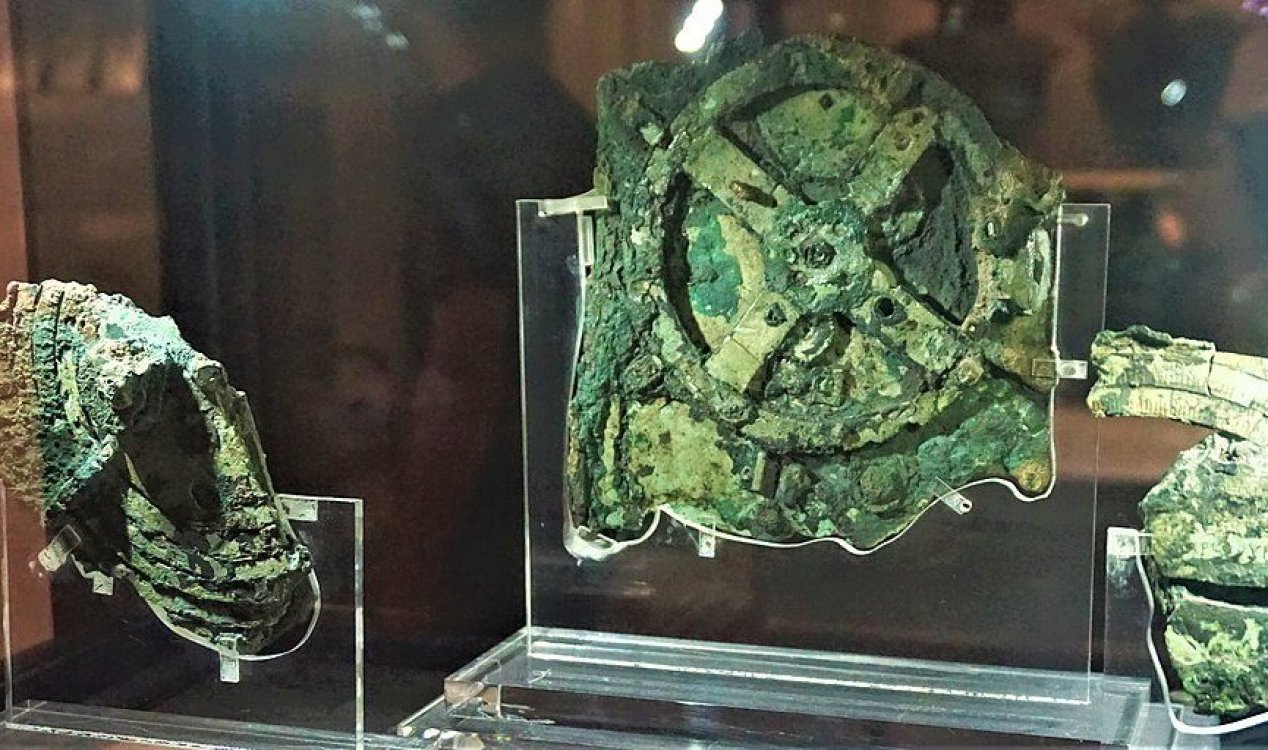
Image: Antikythera Mechanism - National Archaeological Museum, Athens
Credit: Joyofmuseums / CC BY-SA 4.0 (adapted)
A recent expedition to the site of the wreckage, which hoped to recover more such devices from the sea floor, has so far managed to retrieve several dozen new artifacts from the ship's remains including a bone or ivory flute, fragments of glassware and the bronze armrest from a throne.
"Every single dive on the wreck delivers something interesting; something beautiful," said project co-director Brendan Foley from the Woods Hole Oceanographic Institute. "It's like a tractor-trailer truck wrecked on the way to Christie's auction house for fine art - it's just amazing."
The Antikythera wreck has been explored several times over the last 115 years with the mechanism itself having been discovered by Greek sponge divers all the way back in the year 1900.
While it isn't clear if there really is more than one of the devices down there, exploration teams are hoping that one day soon they will locate something in the wreck that is equally as significant.
In the meantime though, with a treasure trove of unique artifacts dating back two millennia, the wreckage is likely to remain a place of great interest to archaeologists for many years to come.
Source: Smithsonian Magazine
More treasures found in Antikythera wreck
By T.K. RandallOctober 1, 2015
Image: Antikythera Mechanism - National Archaeological Museum, Athens
Credit: Joyofmuseums / CC BY-SA 4.0 (adapted)
Divers exploring a 2,000-year-old shipwreck off the coast of Greece have found over 50 new artifacts.
Located on the sea floor off the island of Antikythera, the ancient sailing vessel, which is believed to be one of the largest Roman era ships ever found, was originally home to the famous Antikythera mechanism, an early 'computer' that was used by seafarers to chart the motion of the planets.A recent expedition to the site of the wreckage, which hoped to recover more such devices from the sea floor, has so far managed to retrieve several dozen new artifacts from the ship's remains including a bone or ivory flute, fragments of glassware and the bronze armrest from a throne.
"Every single dive on the wreck delivers something interesting; something beautiful," said project co-director Brendan Foley from the Woods Hole Oceanographic Institute. "It's like a tractor-trailer truck wrecked on the way to Christie's auction house for fine art - it's just amazing."
While it isn't clear if there really is more than one of the devices down there, exploration teams are hoping that one day soon they will locate something in the wreck that is equally as significant.
In the meantime though, with a treasure trove of unique artifacts dating back two millennia, the wreckage is likely to remain a place of great interest to archaeologists for many years to come.
Source: Smithsonian Magazine
Similar stories based on this topic:



The Unexplained Mysteries
Book of Weird News
AVAILABLE NOW
Take a walk on the weird side with this compilation of some of the weirdest stories ever to grace the pages of a newspaper.
Click here to learn more

Support us on Patreon
BONUS CONTENTFor less than the cost of a cup of coffee, you can gain access to a wide range of exclusive perks including our popular 'Lost Ghost Stories' series.
Click here to learn more

1 week
2 weeks
3 weeks
1 month


This week
This month
All time
| - | 1. | Pareidolia |
 |
2. | Loch Ness Monster |
|
3. | Ghost |
 |
4. | Electronic Voice Phenomenon |
|
5. | Yeti |
|
6. | Area 51 |
|
7. | Paranormal |
| - | 8. | Spirit Photography (Classic) |
|
9. | Orb |
| - | 10. | Storm Area 51 |


Top | Home | Forum
News | Columns | Encyclopedia


UM 11.3 Unexplained-Mysteries.com (c) 2001-2026
Terms | Privacy Policy | Cookies | Contact
News | Columns | Encyclopedia
UM 11.3 Unexplained-Mysteries.com (c) 2001-2026
Terms | Privacy Policy | Cookies | Contact