





Palaeontology
November 28, 2015


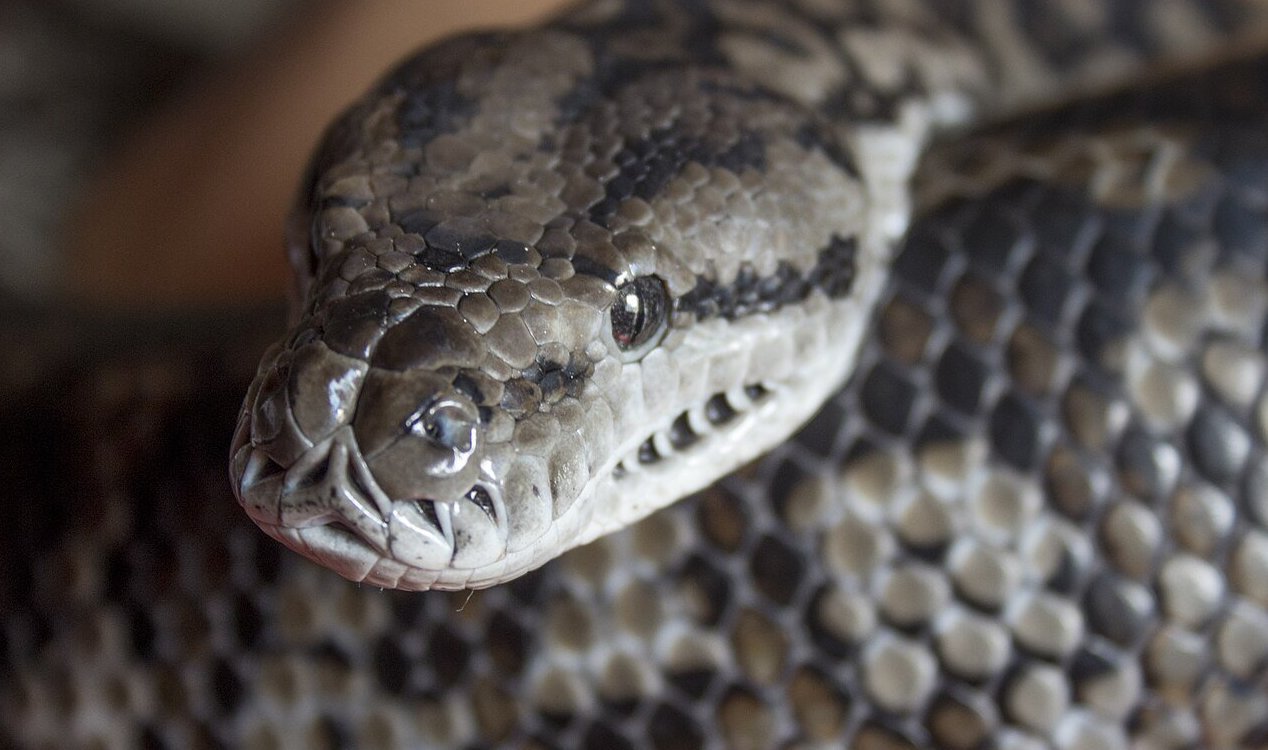
Image: Murray Darling Carpet Python
Credit: Scarlet23 / CC BY-SA 3.0 (adapted)
By comparing its interior canals and cavities with those of several modern species, the scientists were able to determine that burrowing animals exhibited a distinct inner ear structure that was different to that of animals which did not burrow at all.
By analyzing the fossils it became possible to find a correlation between the time at which snakes lost their limbs and the time at which they started to live and hunt in burrows.
"How snakes lost their legs has long been a mystery to scientists, but it seems that this happened when their ancestors became adept at burrowing," said lead scientist Dr Hongyu Yi.
"The inner ears of fossils can reveal a remarkable amount of information, and are very useful when the exterior of fossils are too damaged or fragile to examine."
Source: Irish Examiner
Scientists solve how snakes lost their legs
By T.K. RandallNovember 28, 2015
Image: Murray Darling Carpet Python
Credit: Scarlet23 / CC BY-SA 3.0 (adapted)
Researchers have revealed that snakes lost their limbs when they began living and hunting in burrows.
The findings were based on new CT scans of Dinilysia patagonica - a relative of modern snakes which lived around 90 million years ago and grew up to two meters in length.By comparing its interior canals and cavities with those of several modern species, the scientists were able to determine that burrowing animals exhibited a distinct inner ear structure that was different to that of animals which did not burrow at all.
"How snakes lost their legs has long been a mystery to scientists, but it seems that this happened when their ancestors became adept at burrowing," said lead scientist Dr Hongyu Yi.
"The inner ears of fossils can reveal a remarkable amount of information, and are very useful when the exterior of fossils are too damaged or fragile to examine."
Source: Irish Examiner
Similar stories based on this topic:



The Unexplained Mysteries
Book of Weird News
AVAILABLE NOW
Take a walk on the weird side with this compilation of some of the weirdest stories ever to grace the pages of a newspaper.
Click here to learn more

Support us on Patreon
BONUS CONTENTFor less than the cost of a cup of coffee, you can gain access to a wide range of exclusive perks including our popular 'Lost Ghost Stories' series.
Click here to learn more

1 week
2 weeks
3 weeks
1 month


This week
This month
All time
| - | 1. | Pareidolia |
 |
2. | Loch Ness Monster |
|
3. | Ghost |
 |
4. | Electronic Voice Phenomenon |
|
5. | Yeti |
|
6. | Area 51 |
|
7. | Paranormal |
| - | 8. | Spirit Photography (Classic) |
|
9. | Orb |
| - | 10. | Storm Area 51 |


Top | Home | Forum
News | Columns | Encyclopedia


UM 11.3 Unexplained-Mysteries.com (c) 2001-2026
Terms | Privacy Policy | Cookies | Contact
News | Columns | Encyclopedia
UM 11.3 Unexplained-Mysteries.com (c) 2001-2026
Terms | Privacy Policy | Cookies | Contact