





Nature & Environment
January 28, 2016


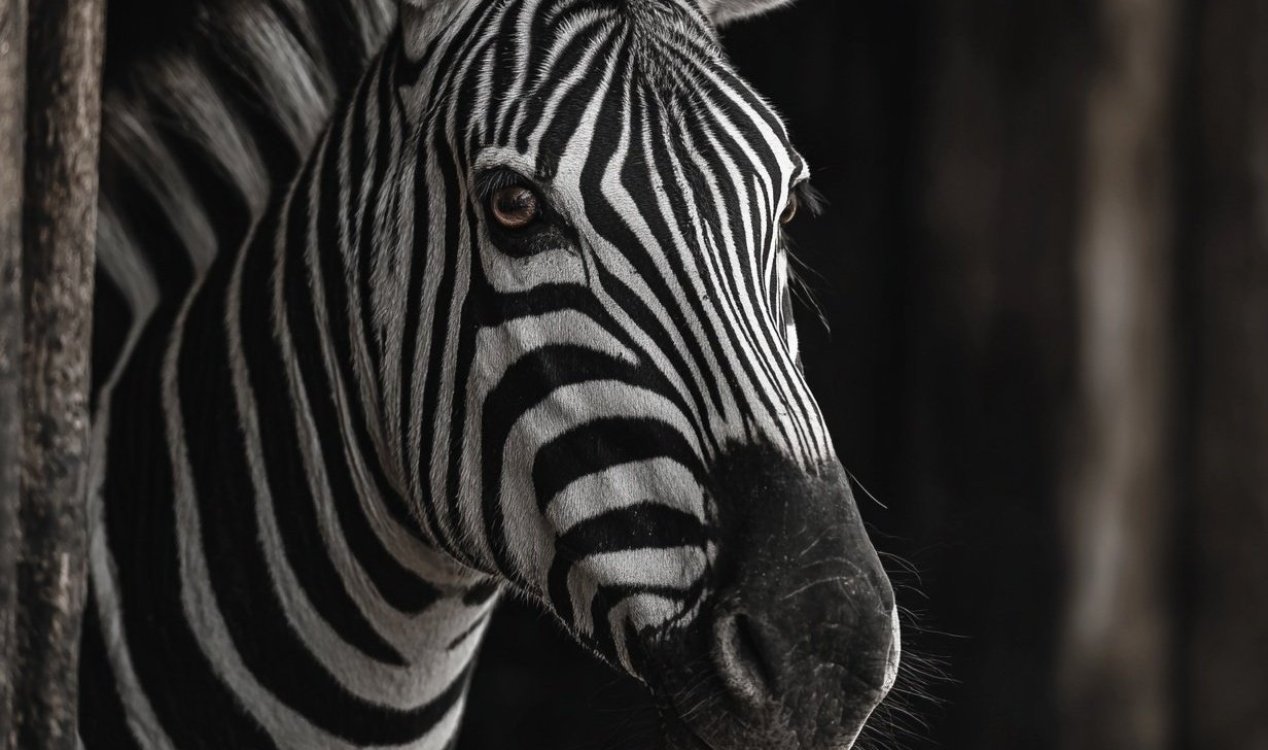
Image: AI-generated (Midjourney)
One of the most common theories is that it helps the animals to stay camouflaged from lions and other predators in the African savannas, but now scientists in Canada have found evidence to suggest that having stripes doesn't actually help the animals stay hidden at all.
The key to their discovery was the realization that while the stripes might make zebras harder for humans to see in certain environments, not all animals see the same way we do.
Experiments using a set of fake stripes designed to simulate how a predator might see them concluded that they had a mostly negligible impact on a zebra's ability to stay hidden.
Instead, the researchers argue, the stripes are most likely a defense mechanism designed to dissuade certain types of horse-flies from biting.
Source: Forbes
A zebra's stripes are not for camouflage
By T.K. RandallJanuary 28, 2016
Image: AI-generated (Midjourney)
Scientists have played down the idea that a zebra relies on its stripes to help it hide from predators.
With its distinctive black and white stripes the zebra is one of the most recognizable animals in the world, yet the exact purpose of its monochromatic coat has remained a topic of debate for years.One of the most common theories is that it helps the animals to stay camouflaged from lions and other predators in the African savannas, but now scientists in Canada have found evidence to suggest that having stripes doesn't actually help the animals stay hidden at all.
Experiments using a set of fake stripes designed to simulate how a predator might see them concluded that they had a mostly negligible impact on a zebra's ability to stay hidden.
Instead, the researchers argue, the stripes are most likely a defense mechanism designed to dissuade certain types of horse-flies from biting.
Source: Forbes



The Unexplained Mysteries
Book of Weird News
AVAILABLE NOW
Take a walk on the weird side with this compilation of some of the weirdest stories ever to grace the pages of a newspaper.
Click here to learn more

Support us on Patreon
BONUS CONTENTFor less than the cost of a cup of coffee, you can gain access to a wide range of exclusive perks including our popular 'Lost Ghost Stories' series.
Click here to learn more

1 week
2 weeks
3 weeks
1 month


This week
This month
All time
 |
1. | Loch Ness Monster |
|
2. | Electronic Voice Phenomenon |
 |
3. | Pareidolia |
|
4. | Ghost |
|
5. | Orb |
|
6. | Area 51 |
|
7. | Yeti |
|
8. | Spirit Photography (Classic) |
|
9. | Bigfoot |
|
10. | Extraterrestrial |


Top | Home | Forum
News | Columns | Encyclopedia


UM 11.3 Unexplained-Mysteries.com (c) 2001-2026
Terms | Privacy Policy | Cookies | Contact
News | Columns | Encyclopedia
UM 11.3 Unexplained-Mysteries.com (c) 2001-2026
Terms | Privacy Policy | Cookies | Contact