





Space & Astronomy
October 3, 2017


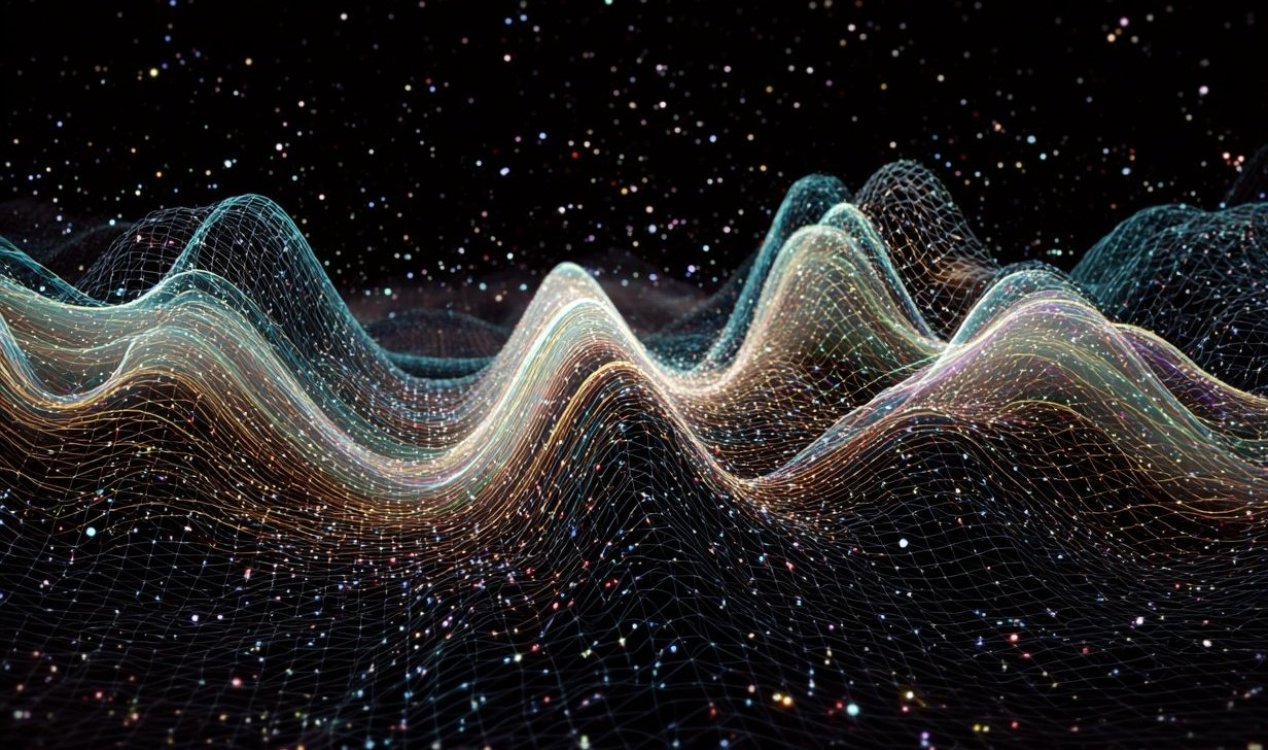
Image: AI-generated (Midjourney)
Originally proposed by Albert Einstein as a consequence of his General Theory of Relativity, gravitational waves are ripples in the fabric of space-time that carry energy across the universe.
The first time gravitational waves were detected was back in 2015 when LIGO picked up the warping of space-time generated by the collision of two black holes situated over one billion light years away.
Since then there have been three more confirmed detections including one in August of this year.
Scientists are now hoping to use gravitational waves to learn more about the Big Bang.
"There are calculations that indicate that the very earliest instants of the universe, right after the universe gets born, there is an enormous amount of background radiation of gravitational waves generated," said Weiss.
"That would be one of the most fascinating things man could [see] because it will tell you very much how the universe starts."
Source: The Guardian
Gravitational wave scientists bag Nobel Prize
By T.K. RandallOctober 3, 2017
Image: AI-generated (Midjourney)
The winning trio were responsible for the first ever confirmed detection of gravitational waves.
Rainer Weiss, Barry Barish and Kip Thorne picked up this year's Nobel prize in physics for their work on the Laser Interferometer Gravitational-Wave Observatory (LIGO) experiment.Originally proposed by Albert Einstein as a consequence of his General Theory of Relativity, gravitational waves are ripples in the fabric of space-time that carry energy across the universe.
The first time gravitational waves were detected was back in 2015 when LIGO picked up the warping of space-time generated by the collision of two black holes situated over one billion light years away.
Scientists are now hoping to use gravitational waves to learn more about the Big Bang.
"There are calculations that indicate that the very earliest instants of the universe, right after the universe gets born, there is an enormous amount of background radiation of gravitational waves generated," said Weiss.
"That would be one of the most fascinating things man could [see] because it will tell you very much how the universe starts."
Source: The Guardian
Similar stories based on this topic:


The Unexplained Mysteries
Book of Weird News
AVAILABLE NOW
Take a walk on the weird side with this compilation of some of the weirdest stories ever to grace the pages of a newspaper.
Click here to learn more

Support us on Patreon
BONUS CONTENTFor less than the cost of a cup of coffee, you can gain access to a wide range of exclusive perks including our popular 'Lost Ghost Stories' series.
Click here to learn more

1 week
2 weeks
3 weeks
1 month


This week
This month
All time
| - | 1. | Electronic Voice Phenomenon |
 |
2. | Pareidolia |
|
3. | Spirit Photography (Classic) |
|
4. | Roswell Incident |
|
5. | Yeti |
 |
6. | Orb |
| - | 7. | Area 51 |
|
8. | Loch Ness Monster |
|
9. | Paranormal |
|
10. | Bigfoot |


Top | Home | Forum
News | Columns | Encyclopedia


UM 11.3 Unexplained-Mysteries.com (c) 2001-2026
Terms | Privacy Policy | Cookies | Contact
News | Columns | Encyclopedia
UM 11.3 Unexplained-Mysteries.com (c) 2001-2026
Terms | Privacy Policy | Cookies | Contact