





Science & Technology
June 14, 2024


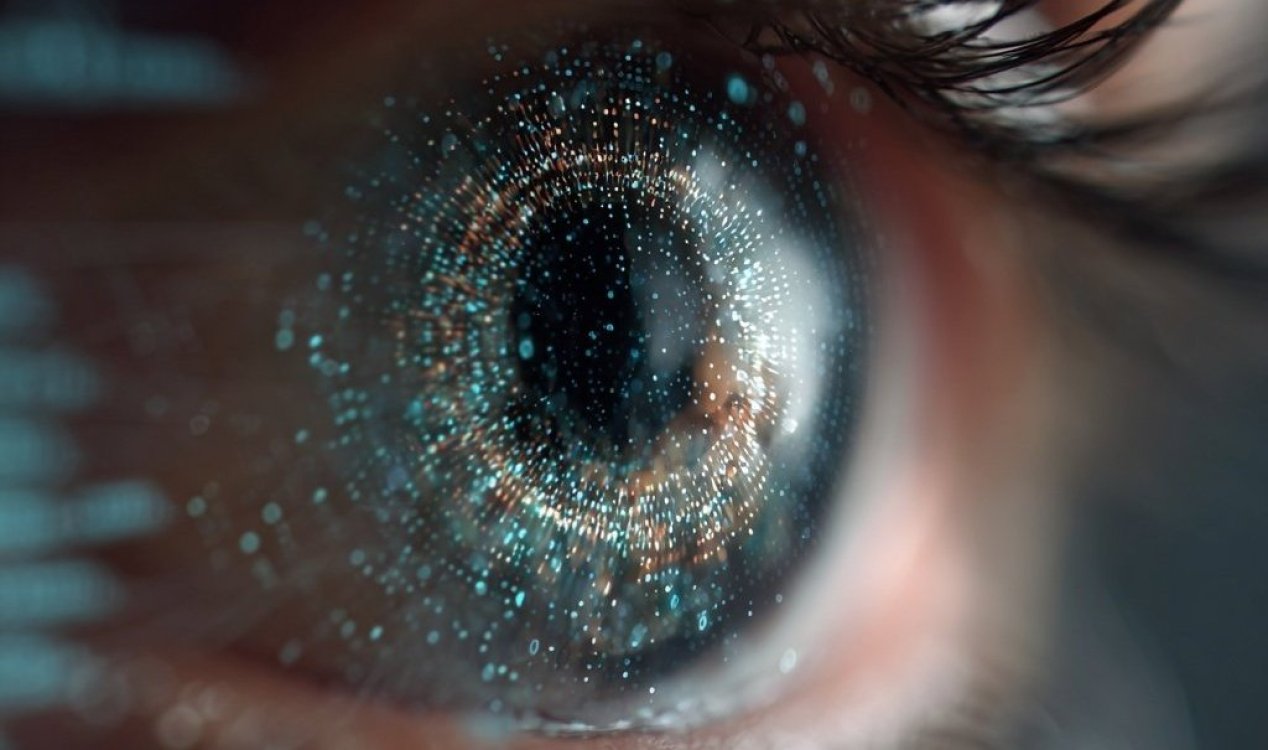
Image: AI-generated (Midjourney)
The test itself was very simple - requiring a participant to communicate via textual messages with both a human and a machine, without being told which of them is which.
In order for the machine to pass the test, the participant would need to be unable to distinguish - after conversing with both of them - which of them was the human and which was the machine.
Even though computers became increasingly sophisticated over the course of the 20th Century, none of them were able to come close to convincing someone that they are in fact a real person.
With the advent of modern artificial intelligence systems, however, it looks as the Turing test has finally found a winner - that is, at least, according to a recent study.
For the research, scientists asked 500 people to speak to four respondents - a human, an old 1960s-era AI program called ELIZA and two versions of OpenAI's modern ChatGPT.
Each conversation lasted 5 minutes and the participants had to work out which respondent was human and which was an AI.
Incredibly, 54% of participants believed that the latest iteration of ChatGPT was in fact human.
"ELIZA was limited to canned responses, which greatly limited its capabilities," AI researcher Nell Watson told Live Science.
"It might fool someone for five minutes, but soon the limitations would become clear."
"Language models are endlessly flexible, able to synthesize responses to a broad range of topics, speak in particular languages or sociolects and portray themselves with character-driven personality and values."
"It's an enormous step forward from something hand-programmed by a human being, no matter how cleverly and carefully."
Source: Live Science
The Turing test has been passed for the first time, scientists claim
By T.K. RandallJune 14, 2024
Image: AI-generated (Midjourney)
Developed by Alan Turing, the test can only be passed by an AI that is indistinguishable from a human being.
Back in 1950, Turing - the famed mathematician, computer scientist and logician who is widely regarded to be the father of theoretical computer science - devised a test to answer the question of whether or not computers are capable of exhibiting genuine intelligence.The test itself was very simple - requiring a participant to communicate via textual messages with both a human and a machine, without being told which of them is which.
In order for the machine to pass the test, the participant would need to be unable to distinguish - after conversing with both of them - which of them was the human and which was the machine.
Even though computers became increasingly sophisticated over the course of the 20th Century, none of them were able to come close to convincing someone that they are in fact a real person.
With the advent of modern artificial intelligence systems, however, it looks as the Turing test has finally found a winner - that is, at least, according to a recent study.
For the research, scientists asked 500 people to speak to four respondents - a human, an old 1960s-era AI program called ELIZA and two versions of OpenAI's modern ChatGPT.
Incredibly, 54% of participants believed that the latest iteration of ChatGPT was in fact human.
"ELIZA was limited to canned responses, which greatly limited its capabilities," AI researcher Nell Watson told Live Science.
"It might fool someone for five minutes, but soon the limitations would become clear."
"Language models are endlessly flexible, able to synthesize responses to a broad range of topics, speak in particular languages or sociolects and portray themselves with character-driven personality and values."
"It's an enormous step forward from something hand-programmed by a human being, no matter how cleverly and carefully."
Source: Live Science
Similar stories based on this topic:


The Unexplained Mysteries
Book of Weird News
AVAILABLE NOW
Take a walk on the weird side with this compilation of some of the weirdest stories ever to grace the pages of a newspaper.
Click here to learn more

Support us on Patreon
BONUS CONTENTFor less than the cost of a cup of coffee, you can gain access to a wide range of exclusive perks including our popular 'Lost Ghost Stories' series.
Click here to learn more

1 week
2 weeks
3 weeks
1 month


This week
This month
All time
| - | 1. | Loch Ness Monster |
 |
2. | Area 51 |
|
3. | Storm Area 51 |
|
4. | Bigfoot |
|
5. | Paranormal |
 |
6. | Ghost |
|
7. | Spirit Photography (Classic) |
|
8. | Electronic Voice Phenomenon |
|
9. | Orb |
|
10. | Pareidolia |


Top | Home | Forum
News | Columns | Encyclopedia


UM 11.3 Unexplained-Mysteries.com (c) 2001-2026
Terms | Privacy Policy | Cookies | Contact
News | Columns | Encyclopedia
UM 11.3 Unexplained-Mysteries.com (c) 2001-2026
Terms | Privacy Policy | Cookies | Contact