





Palaeontology
September 16, 2025


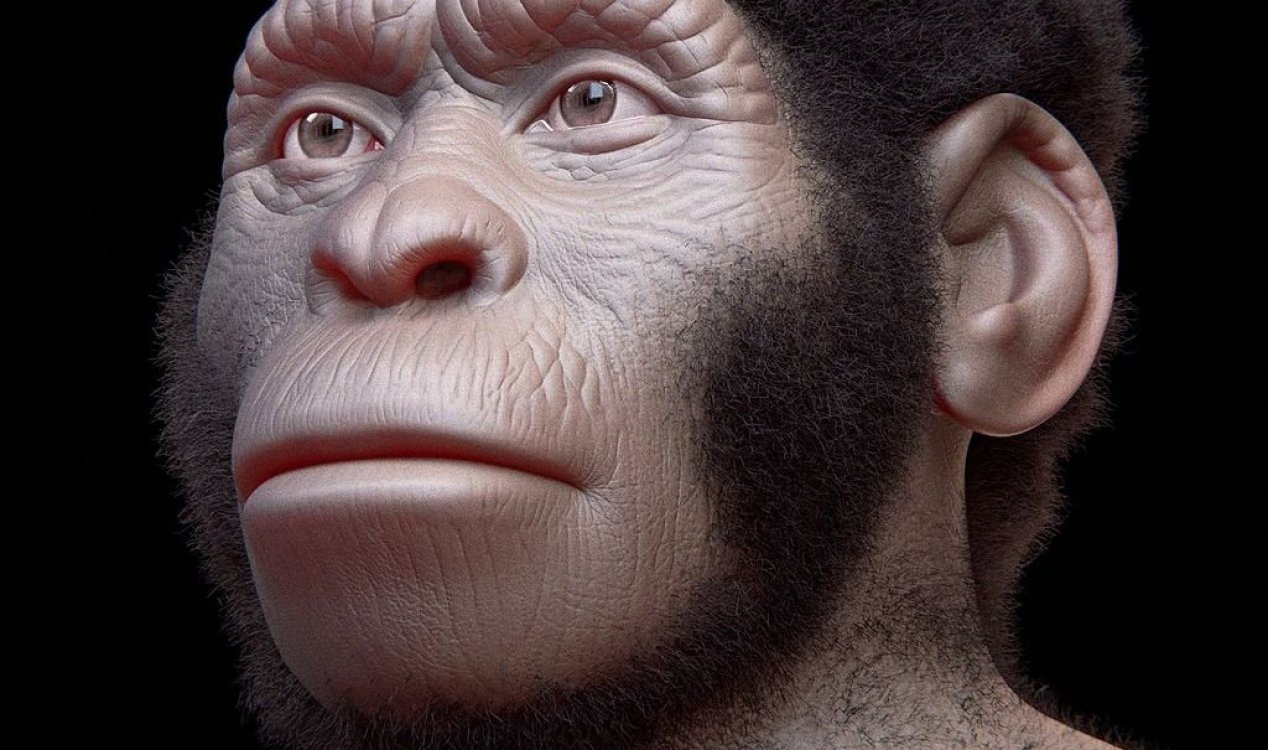
Image: Homo Naledi Facial Reconstruction
Credit: Cicero Moraes (Arc-Team) et alii / CC BY 4.0 (adapted)
What made the discovery so significant is that these bones, which belonged to a species of extinct hominin known as Homo Naledi, seemed to have been deliberately buried in the ground in some of the remotest and most difficult to access parts of the cave.
This suggested that Homo Naledi had engaged in mortuary practices some 240,000 years ago - a time long before even modern humans had done so.
The significance of the discovery was so great that the findings became subject to a great deal of scrutiny, with some researchers arguing that the bones had likely ended up in the cave due to natural processes such as flooding.
Now, though, another study has found compelling supporting evidence pointing to the likelihood that the deliberate burial theory is most likely to be correct.
The expedition, which involved 28 researchers from six countries, discovered several new burials within the cave system that also appeared to have been placed there deliberately.
It is easy to understate the significance of Homo Naledi's behavior - they had intentionally buried the remains of their deceased in the ground 100,000 years before our own species.
It raises questions over the evolution of intelligence and hominin evolution as a whole.
What else could our ancestors have been capable of ?
We may only now be starting to lift the lid.
Source: The Debrief
New findings help to further cement Homo Naledi cave burial theory
By T.K. RandallSeptember 16, 2025
Image: Homo Naledi Facial Reconstruction
Credit: Cicero Moraes (Arc-Team) et alii / CC BY 4.0 (adapted)
South Africa's Rising Star cave system is home to one of the most important discoveries in paleoanthropology.
Back in 2013, a team of researchers headed up by paleoanthropologist Lee Berger discovered 1,500 bones from at least 15 individuals in the Rising Star cave near Johannesburg, South Africa.What made the discovery so significant is that these bones, which belonged to a species of extinct hominin known as Homo Naledi, seemed to have been deliberately buried in the ground in some of the remotest and most difficult to access parts of the cave.
This suggested that Homo Naledi had engaged in mortuary practices some 240,000 years ago - a time long before even modern humans had done so.
The significance of the discovery was so great that the findings became subject to a great deal of scrutiny, with some researchers arguing that the bones had likely ended up in the cave due to natural processes such as flooding.
Now, though, another study has found compelling supporting evidence pointing to the likelihood that the deliberate burial theory is most likely to be correct.
It is easy to understate the significance of Homo Naledi's behavior - they had intentionally buried the remains of their deceased in the ground 100,000 years before our own species.
It raises questions over the evolution of intelligence and hominin evolution as a whole.
What else could our ancestors have been capable of ?
We may only now be starting to lift the lid.
Source: The Debrief
Similar stories based on this topic:



The Unexplained Mysteries
Book of Weird News
AVAILABLE NOW
Take a walk on the weird side with this compilation of some of the weirdest stories ever to grace the pages of a newspaper.
Click here to learn more

Support us on Patreon
BONUS CONTENTFor less than the cost of a cup of coffee, you can gain access to a wide range of exclusive perks including our popular 'Lost Ghost Stories' series.
Click here to learn more

1 week
2 weeks
3 weeks
1 month


This week
This month
All time
 |
1. | Loch Ness Monster |
 |
2. | Electronic Voice Phenomenon |
|
3. | Pareidolia |
| - | 4. | Area 51 |
| - | 5. | Phoenix Lights |
| - | 6. | Orb |
| - | 7. | Bigfoot |
| - | 8. | Stanton Friedman |
| - | 9. | Ghost |
|
10. | Storm Area 51 |


Top | Home | Forum
News | Columns | Encyclopedia


UM 11.3 Unexplained-Mysteries.com (c) 2001-2026
Terms | Privacy Policy | Cookies | Contact
News | Columns | Encyclopedia
UM 11.3 Unexplained-Mysteries.com (c) 2001-2026
Terms | Privacy Policy | Cookies | Contact