





Science & Technology
September 18, 2025


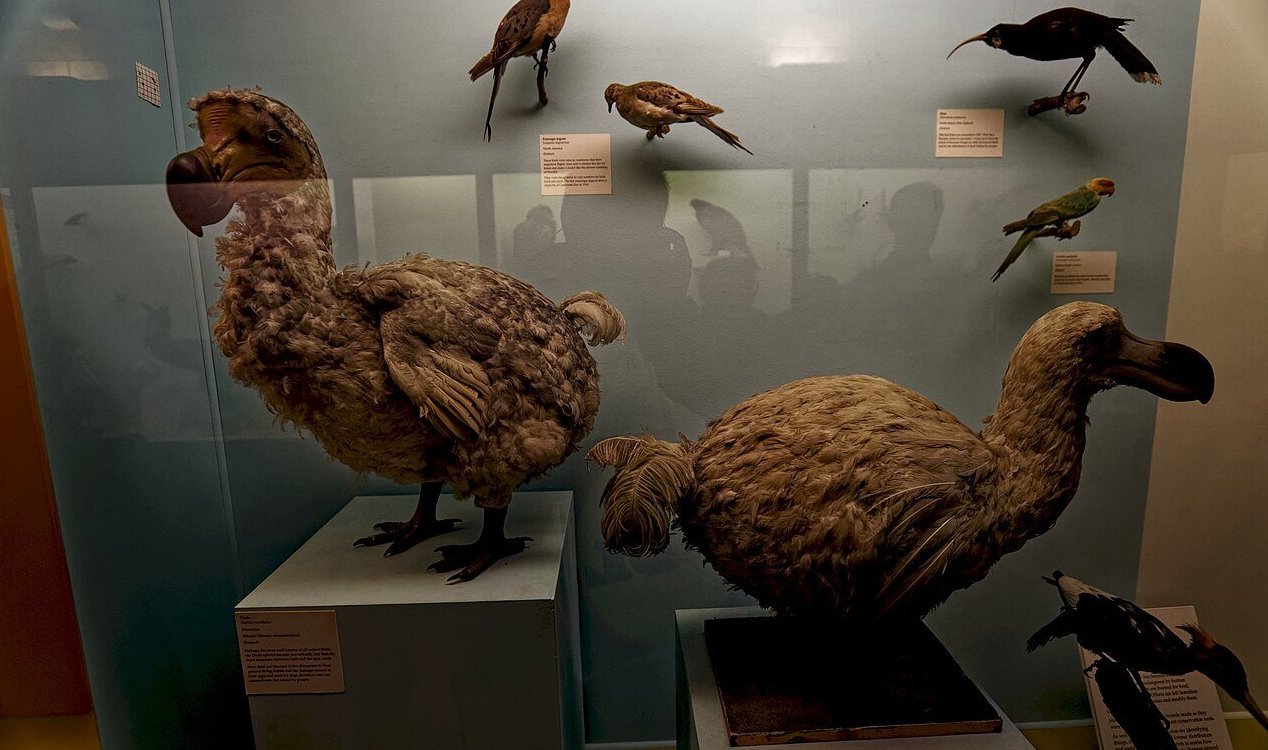
Image: Dodos at the Natural History Museum in London
Credit: Txllxt TxllxT / CC BY-SA 4.0 (adapted)
The first reported encounter with a dodo was by Dutch sailors in 1598 and by 1662 the species had been completely wiped out due to hunting and the destruction of its habitat.
Now, though, Texas-based de-extinction firm Colossal Biosciences has claimed that it has taken a "pivotal step" toward bringing the dodo back from the dead.
On Wednesday, the firm reported that it had, for the first time, succeeded in growing pigeon primordial germ cells - the precursor cells to sperm and eggs (the dodo was a type of pigeon).
The firm also claims to have developed gene-edited chickens that will act as surrogates.
To create a dodo, the chickens would be injected with primordial germ cells from the dodos' closest living relative - the Nicobar pigeon.
Using gene editing, this would eventually make it possible to breed live dodos.
According to chief executive Ben Lamm, this could all be accomplished in less than 10 years.
"Our goal is to make enough dodos with enough genetic diversity engineered into them that we can put them back into the wild where they can truly thrive," he said.
"So we're not looking to make two dodos, we're looking to make thousands."
Source: The Guardian
Scientists take 'pivotal step' in bringing back the extinct dodo
By T.K. RandallSeptember 18, 2025
Image: Dodos at the Natural History Museum in London
Credit: Txllxt TxllxT / CC BY-SA 4.0 (adapted)
Colossal Biosciences claims that it should be able to bring the species back within the next decade.
This iconic flightless bird, which once inhabited the island of Mauritius, is perhaps the best known example of a species hunted to extinction by man - a creature that has since become synonymous with the idea that our activities on this planet can have dire consequences for other species.The first reported encounter with a dodo was by Dutch sailors in 1598 and by 1662 the species had been completely wiped out due to hunting and the destruction of its habitat.
Now, though, Texas-based de-extinction firm Colossal Biosciences has claimed that it has taken a "pivotal step" toward bringing the dodo back from the dead.
On Wednesday, the firm reported that it had, for the first time, succeeded in growing pigeon primordial germ cells - the precursor cells to sperm and eggs (the dodo was a type of pigeon).
To create a dodo, the chickens would be injected with primordial germ cells from the dodos' closest living relative - the Nicobar pigeon.
Using gene editing, this would eventually make it possible to breed live dodos.
According to chief executive Ben Lamm, this could all be accomplished in less than 10 years.
"Our goal is to make enough dodos with enough genetic diversity engineered into them that we can put them back into the wild where they can truly thrive," he said.
"So we're not looking to make two dodos, we're looking to make thousands."
Source: The Guardian
Similar stories based on this topic:



The Unexplained Mysteries
Book of Weird News
AVAILABLE NOW
Take a walk on the weird side with this compilation of some of the weirdest stories ever to grace the pages of a newspaper.
Click here to learn more

Support us on Patreon
BONUS CONTENTFor less than the cost of a cup of coffee, you can gain access to a wide range of exclusive perks including our popular 'Lost Ghost Stories' series.
Click here to learn more

1 week
2 weeks
3 weeks
1 month


This week
This month
All time
 |
1. | Pareidolia |
 |
2. | Loch Ness Monster |
|
3. | Orb |
|
4. | Area 51 |
|
5. | Bigfoot |
|
6. | Spirit Photography (Classic) |
|
7. | Unidentified Flying Object |
|
8. | Electronic Voice Phenomenon |
|
9. | Roswell Incident |
|
10. | Paranormal |


Top | Home | Forum
News | Columns | Encyclopedia


UM 11.3 Unexplained-Mysteries.com (c) 2001-2026
Terms | Privacy Policy | Cookies | Contact
News | Columns | Encyclopedia
UM 11.3 Unexplained-Mysteries.com (c) 2001-2026
Terms | Privacy Policy | Cookies | Contact