





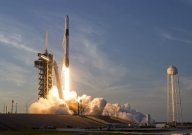
SpaceX rocket landing attempt has failed
Jan 10, 2015The American firm has been attempting to develop rocket parts that can be returned to Earth and reused.
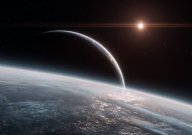
New Earth-like extrasolar planet discovered
Jan 7, 2015The newly found Kepler 438b is being hailed by astronomers as the most Earth-like world ever found.
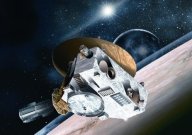
New Horizons approaches Pluto after 9 years
Jan 5, 2015The long-running NASA spacecraft will soon become the first ever to visit this distant, icy world.

Opportunity rover is suffering from 'amnesia'
Jan 4, 2015Having explored Mars for over a decade the long-serving rover is beginning to show signs of old age.
Scientists 'play God' by creating a universe
Jan 1, 2015Two of the world's most powerful supercomputers have been used to build a simulation of the cosmos.
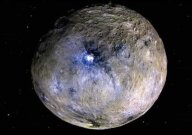
Dawn spacecraft on final approach to Ceres
Dec 31, 2014NASA's explorary orbiter is due to go in to orbit around the enigmatic dwarf planet in March 2015.

New project aims to grow lettuce on Mars
Dec 30, 2014A team of science students is hoping to become the first to grow plants on the surface of the Red Planet.
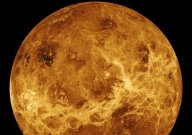
Venus once had carbon dioxide oceans
Dec 29, 2014Despite its hellish conditions, Venus may have once had its own version of Earth's oceans.
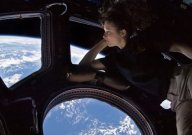
Astronaut releases Earth timelapse video
VIDEO Dec 28, 2014Alexander Gerst has created a breathtaking visual record of our planet as seen from space.
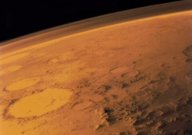
Scientists develop new way to reach Mars
Dec 26, 2014A cheaper and safer way to get to Mars will make it far easier to send missions there in the future.
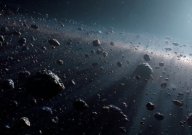
Nukes could be used to destroy asteroids
Dec 22, 2014The ultimate weapons of mass destruction could one day save us from complete annihilation.
NASA proposes a 'cloud city' above Venus
VIDEO Dec 21, 2014A future manned mission to Venus could see astronauts piloting blimps around the planet's atmosphere.
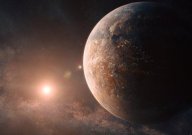
Kepler discovers new extrasolar planet
Dec 21, 2014NASA's Kepler space telescope has made its first discovery since being crippled by a technical fault.
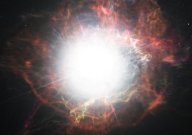
Could Eta Carinae explode and wipe us out ?
Dec 19, 2014A massive and volatile star located 7,500 light years away is on the verge of going supernova.
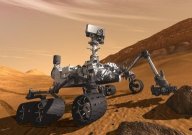
Has Curiosity found evidence of life on Mars?
Dec 17, 2014NASA's exploratory rover has discovered mysterious 'belches' of methane gas on the surface of Mars.
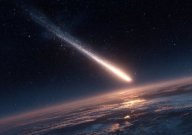
Color photograph of comet 67P released
Dec 15, 2014For the first time Rosetta's new home can be viewed in full color, even though there isn't much of it.
Earth's water didn't come from comets
Dec 13, 2014Rosetta has discovered that the water on comet 67P is different to the water that we have here on Earth.
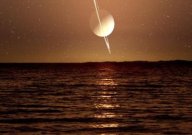
Mystery of Titan's sand dunes solved
Dec 10, 2014Scientists have determined how huge sand dunes up to 300ft high managed to form on the Saturnian moon.
New mountain-sized asteroid discovered
Dec 10, 2014A Russian scientist has identified a huge asteroid that crosses the Earth's orbit every three years.
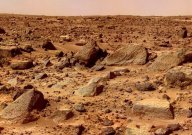
Mysterious 'island' discovered on Mars
Dec 7, 2014NASA is trying to determine the origins of a strange circular feature in the Athabasca region of Mars.



News | Columns | Encyclopedia


UM 11.3 Unexplained-Mysteries.com (c) 2001-2026
Terms | Privacy Policy | Cookies | Contact