





Palaeontology
February 22, 2015


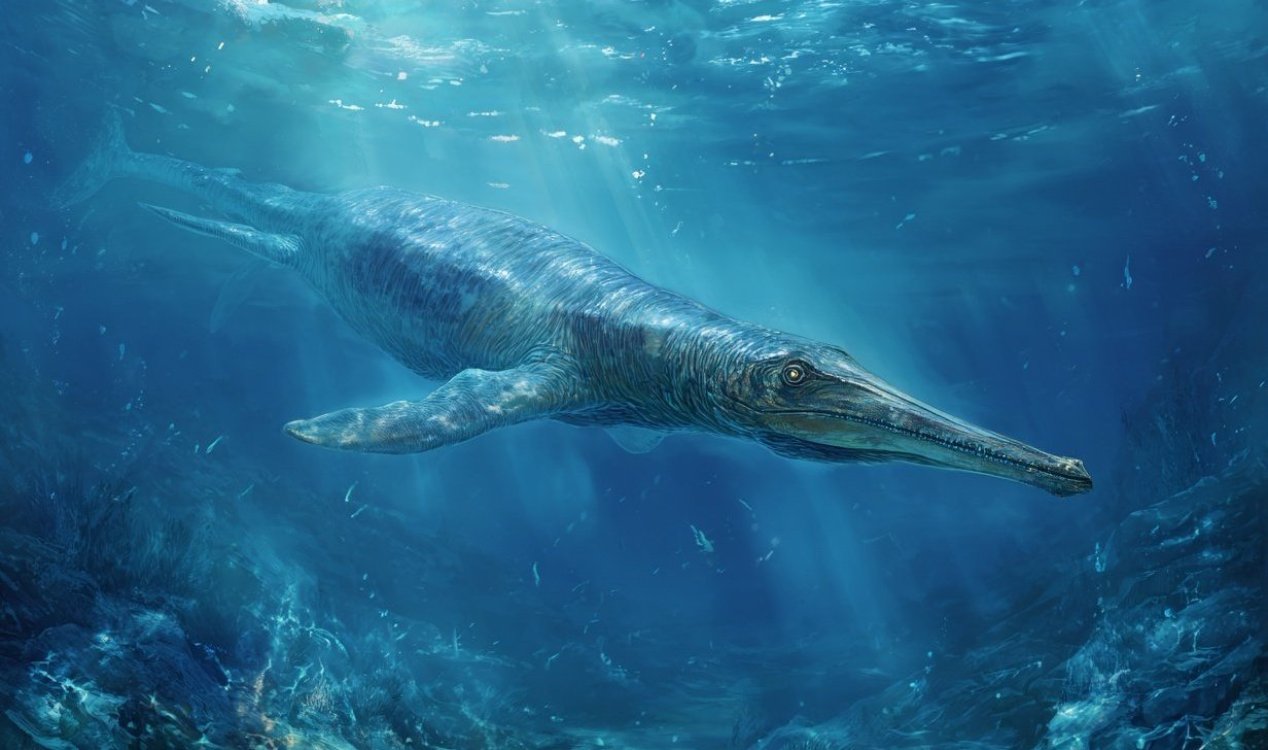
Image: AI-generated (Midjourney)
It wasn't until paleontologist Dean Lomax came across the fossil that the new species was finally identified. Working together with Prof Judy Massare from the State University of New York, Lomax compared the specimen to over 1,000 other ichthyosaurs and realized that it was something that had never been seen before.
The fossil was so well preserved that it was even possible to view the contents of its stomach.
"We could see tiny hook-shaped features that were actually the hooks from the tentacles of squid," said Lomax. "So we know what its last meal was."
The specimen, which was discovered in rocks along Dorset's Jurassic Coast, is one of thousands found around Britain's shores where large numbers of ichthyosaurs once swam millions of years ago.
The new species has been named Ichthyosaurus anningae in honor of Mary Anning, the British fossil hunter who identified the first ever ichthyosaur fossil along the Dorset coast in 1811.
Source: BBC News
New species of ichthyosaur identified
By T.K. RandallFebruary 22, 2015
Image: AI-generated (Midjourney)
The fossil of a previously unknown species of prehistoric aquatic reptile has been found at a museum.
The remains, which had actually been discovered 30 years ago, had ended up being placed in a collection at Doncaster Museum where their true significance had gone unrecognized for decades.It wasn't until paleontologist Dean Lomax came across the fossil that the new species was finally identified. Working together with Prof Judy Massare from the State University of New York, Lomax compared the specimen to over 1,000 other ichthyosaurs and realized that it was something that had never been seen before.
The fossil was so well preserved that it was even possible to view the contents of its stomach.
The specimen, which was discovered in rocks along Dorset's Jurassic Coast, is one of thousands found around Britain's shores where large numbers of ichthyosaurs once swam millions of years ago.
The new species has been named Ichthyosaurus anningae in honor of Mary Anning, the British fossil hunter who identified the first ever ichthyosaur fossil along the Dorset coast in 1811.
Source: BBC News
Similar stories based on this topic:



The Unexplained Mysteries
Book of Weird News
AVAILABLE NOW
Take a walk on the weird side with this compilation of some of the weirdest stories ever to grace the pages of a newspaper.
Click here to learn more

Support us on Patreon
BONUS CONTENTFor less than the cost of a cup of coffee, you can gain access to a wide range of exclusive perks including our popular 'Lost Ghost Stories' series.
Click here to learn more

1 week
2 weeks
3 weeks
1 month


This week
This month
All time
| - | 1. | Electronic Voice Phenomenon |
| - | 2. | Loch Ness Monster |
 |
3. | Phoenix Lights |
|
4. | Unidentified Flying Object |
|
5. | Ghost |
 |
6. | Area 51 |
|
7. | Spirit Photography (Classic) |
|
8. | Orb |
|
9. | Storm Area 51 |
|
10. | Bigfoot |


Top | Home | Forum
News | Columns | Encyclopedia


UM 11.3 Unexplained-Mysteries.com (c) 2001-2026
Terms | Privacy Policy | Cookies | Contact
News | Columns | Encyclopedia
UM 11.3 Unexplained-Mysteries.com (c) 2001-2026
Terms | Privacy Policy | Cookies | Contact