





Space & Astronomy
August 12, 2017


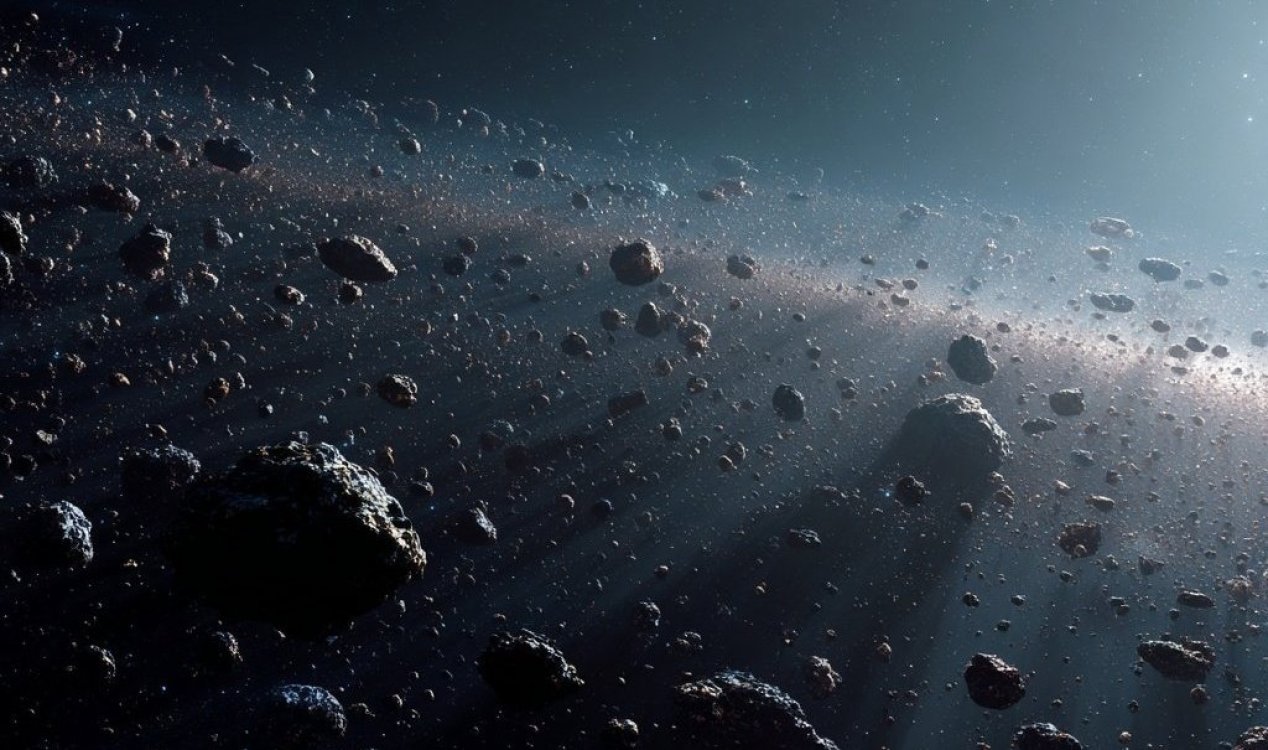
Image: AI-generated (Midjourney)
There had been some uncertainty over just how close it was going to get to our planet during its rendez-vous this year but now, astronomers at the Very Large Telescope of the European Southern Observatory (ESO) have been able to definitively confirm that it does not pose a threat.
"We know for sure that there is no possibility for this object to hit the Earth," said Detlef Koschny of ESA's near-Earth objects research team. "There is no danger whatsoever."
That said, with a trajectory that will take it 27,300 miles from the Earth's surface (approximately an eighth of the distance to the Moon), there is no denying that it will be a close call.
"[This] is an excellent opportunity to test the international ability to detect and track near-Earth objects and assess our ability to respond together to a real asteroid threat," ESA said in a statement.
Source: The Guardian
House-sized asteroid 'will not hit Earth'
By T.K. RandallAugust 12, 2017
Image: AI-generated (Midjourney)
The asteroid known as 2012 TC4 is set to pass us by at a safe distance of 27,300 miles in October.
At around 20-30 meters long, the asteroid, which first skipped past us five years ago, is only slightly smaller than the object thought to have been responsible for the Tunguska explosion in 1908.There had been some uncertainty over just how close it was going to get to our planet during its rendez-vous this year but now, astronomers at the Very Large Telescope of the European Southern Observatory (ESO) have been able to definitively confirm that it does not pose a threat.
That said, with a trajectory that will take it 27,300 miles from the Earth's surface (approximately an eighth of the distance to the Moon), there is no denying that it will be a close call.
"[This] is an excellent opportunity to test the international ability to detect and track near-Earth objects and assess our ability to respond together to a real asteroid threat," ESA said in a statement.
Source: The Guardian
Similar stories based on this topic:


The Unexplained Mysteries
Book of Weird News
AVAILABLE NOW
Take a walk on the weird side with this compilation of some of the weirdest stories ever to grace the pages of a newspaper.
Click here to learn more

Support us on Patreon
BONUS CONTENTFor less than the cost of a cup of coffee, you can gain access to a wide range of exclusive perks including our popular 'Lost Ghost Stories' series.
Click here to learn more

1 week
2 weeks
3 weeks
1 month


This week
This month
All time
| - | 1. | Pareidolia |
 |
2. | Loch Ness Monster |
|
3. | Ghost |
 |
4. | Electronic Voice Phenomenon |
|
5. | Yeti |
|
6. | Area 51 |
|
7. | Paranormal |
| - | 8. | Spirit Photography (Classic) |
|
9. | Orb |
| - | 10. | Storm Area 51 |


Top | Home | Forum
News | Columns | Encyclopedia


UM 11.3 Unexplained-Mysteries.com (c) 2001-2026
Terms | Privacy Policy | Cookies | Contact
News | Columns | Encyclopedia
UM 11.3 Unexplained-Mysteries.com (c) 2001-2026
Terms | Privacy Policy | Cookies | Contact