





Science & Technology
January 28, 2018


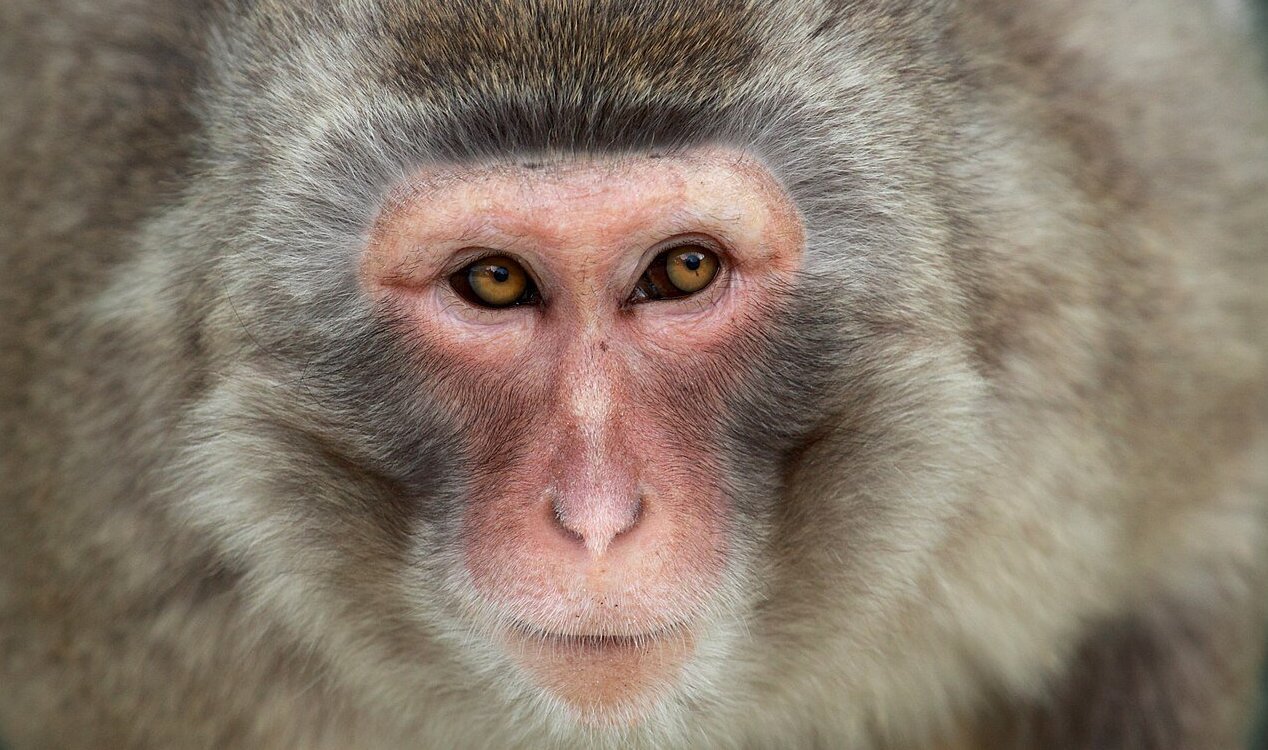
Image: Japanese Macaque
Credit: Alfonsopazphoto / CC BY-SA 3.0 (adapted)
Researchers argue that genetically identical monkeys could prove invaluable in the development of new treatments for human diseases.
The two macaques were born two weeks apart and are believed to be doing well.
According to Professor Robin Lovell-Badge of The Francis Crick Institute in London however, the technique used to clone the monkeys remains "a very inefficient and hazardous procedure."
"The work in this paper is not a stepping-stone to establishing methods for obtaining live born human clones," he said.
It is believed to have taken 127 eggs and 79 embryos to clone two live, healthy monkeys in the lab.
"We tried several different methods, but only one worked," said Qiang Sun of the Chinese Academy of Sciences Institute of Neuroscience.
"There was much failure before we found a way to successfully clone a monkey."
Source: BBC News
Chinese scientists create cloned monkeys
By T.K. RandallJanuary 28, 2018
Image: Japanese Macaque
Credit: Alfonsopazphoto / CC BY-SA 3.0 (adapted)
Two identical long-tailed macaques, Zhong Zhong and Hua Hua, have been created by scientists in China.
The controversial achievement, which some warn has taken us one step closer to human cloning, was accomplished using the same technique used to create Dolly the Sheep back in 1996.Researchers argue that genetically identical monkeys could prove invaluable in the development of new treatments for human diseases.
The two macaques were born two weeks apart and are believed to be doing well.
According to Professor Robin Lovell-Badge of The Francis Crick Institute in London however, the technique used to clone the monkeys remains "a very inefficient and hazardous procedure."
It is believed to have taken 127 eggs and 79 embryos to clone two live, healthy monkeys in the lab.
"We tried several different methods, but only one worked," said Qiang Sun of the Chinese Academy of Sciences Institute of Neuroscience.
"There was much failure before we found a way to successfully clone a monkey."
Source: BBC News


The Unexplained Mysteries
Book of Weird News
AVAILABLE NOW
Take a walk on the weird side with this compilation of some of the weirdest stories ever to grace the pages of a newspaper.
Click here to learn more

Support us on Patreon
BONUS CONTENTFor less than the cost of a cup of coffee, you can gain access to a wide range of exclusive perks including our popular 'Lost Ghost Stories' series.
Click here to learn more

1 week
2 weeks
3 weeks
1 month


This week
This month
All time
| - | 1. | Pareidolia |
 |
2. | Loch Ness Monster |
|
3. | Ghost |
 |
4. | Electronic Voice Phenomenon |
|
5. | Yeti |
|
6. | Area 51 |
|
7. | Paranormal |
| - | 8. | Spirit Photography (Classic) |
|
9. | Orb |
| - | 10. | Storm Area 51 |


Top | Home | Forum
News | Columns | Encyclopedia


UM 11.3 Unexplained-Mysteries.com (c) 2001-2026
Terms | Privacy Policy | Cookies | Contact
News | Columns | Encyclopedia
UM 11.3 Unexplained-Mysteries.com (c) 2001-2026
Terms | Privacy Policy | Cookies | Contact