





Space & Astronomy
August 21, 2018


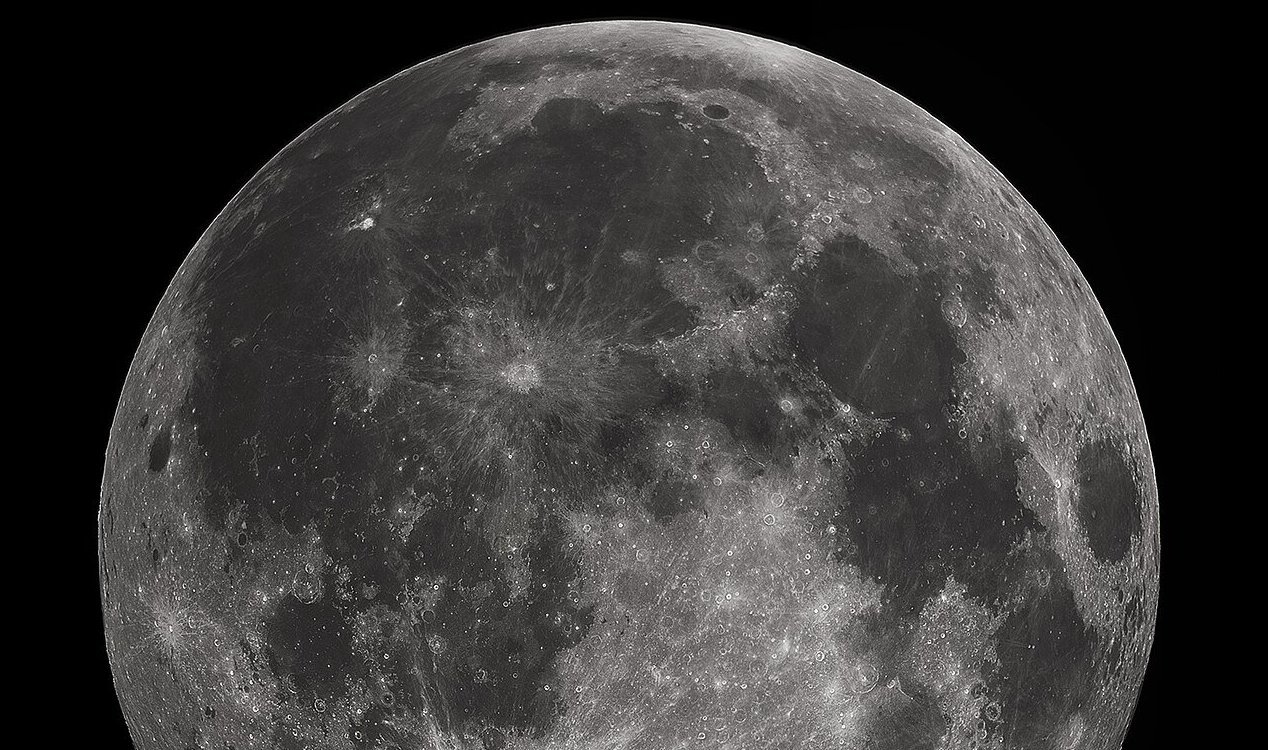
Image: Full Moon
Credit: Gregory H. Revera / CC BY-SA 3.0 (adapted)
It is concentrated mainly within craters at the south pole but is more spread out at the north pole.
Temperatures on the Moon can reach up to 100 degrees Celsius during the daytime, which would seem to make the presence of ice deposits impossible, however due to the Moon's tilt there are certain areas at the poles that remain permanently shadowed.
There had been indications of water ice at the Moon's south pole before, however it had been impossible to tell for sure as scientists could not rule out the reflectivity of the lunar soil.
Now that it is confirmed, it seems that the Moon may be the ideal place for a manned outpost.
"With enough ice sitting at the surface - within the top few millimeters - water would possibly be accessible as a resource for future expeditions to explore and even stay on the moon, and potentially easier to access than the water detected beneath the moon's surface," NASA wrote.
Source: BBC News
Water ice detected on the surface of the Moon
By T.K. RandallAugust 21, 2018
Image: Full Moon
Credit: Gregory H. Revera / CC BY-SA 3.0 (adapted)
The ice deposits could prove to be an important resource for astronauts setting up a manned outpost in the future.
Discovered at both the Moon's north and south polar regions, the ice was detected via the Moon Mineralogy Mapper (M3) instrument on India's Chandrayaan-1 spacecraft.It is concentrated mainly within craters at the south pole but is more spread out at the north pole.
Temperatures on the Moon can reach up to 100 degrees Celsius during the daytime, which would seem to make the presence of ice deposits impossible, however due to the Moon's tilt there are certain areas at the poles that remain permanently shadowed.
Now that it is confirmed, it seems that the Moon may be the ideal place for a manned outpost.
"With enough ice sitting at the surface - within the top few millimeters - water would possibly be accessible as a resource for future expeditions to explore and even stay on the moon, and potentially easier to access than the water detected beneath the moon's surface," NASA wrote.
Source: BBC News
Similar stories based on this topic:



The Unexplained Mysteries
Book of Weird News
AVAILABLE NOW
Take a walk on the weird side with this compilation of some of the weirdest stories ever to grace the pages of a newspaper.
Click here to learn more

Support us on Patreon
BONUS CONTENTFor less than the cost of a cup of coffee, you can gain access to a wide range of exclusive perks including our popular 'Lost Ghost Stories' series.
Click here to learn more

1 week
2 weeks
3 weeks
1 month


This week
This month
All time
| - | 1. | Loch Ness Monster |
| - | 2. | Electronic Voice Phenomenon |
 |
3. | Paranormal |
|
4. | Yeti |
|
5. | Area 51 |
|
6. | Storm Area 51 |
 |
7. | Ghost |
|
8. | Bigfoot |
|
9. | Spirit Photography (Classic) |
|
10. | Orb |


Top | Home | Forum
News | Columns | Encyclopedia


UM 11.3 Unexplained-Mysteries.com (c) 2001-2026
Terms | Privacy Policy | Cookies | Contact
News | Columns | Encyclopedia
UM 11.3 Unexplained-Mysteries.com (c) 2001-2026
Terms | Privacy Policy | Cookies | Contact