





Science & Technology
October 20, 2025


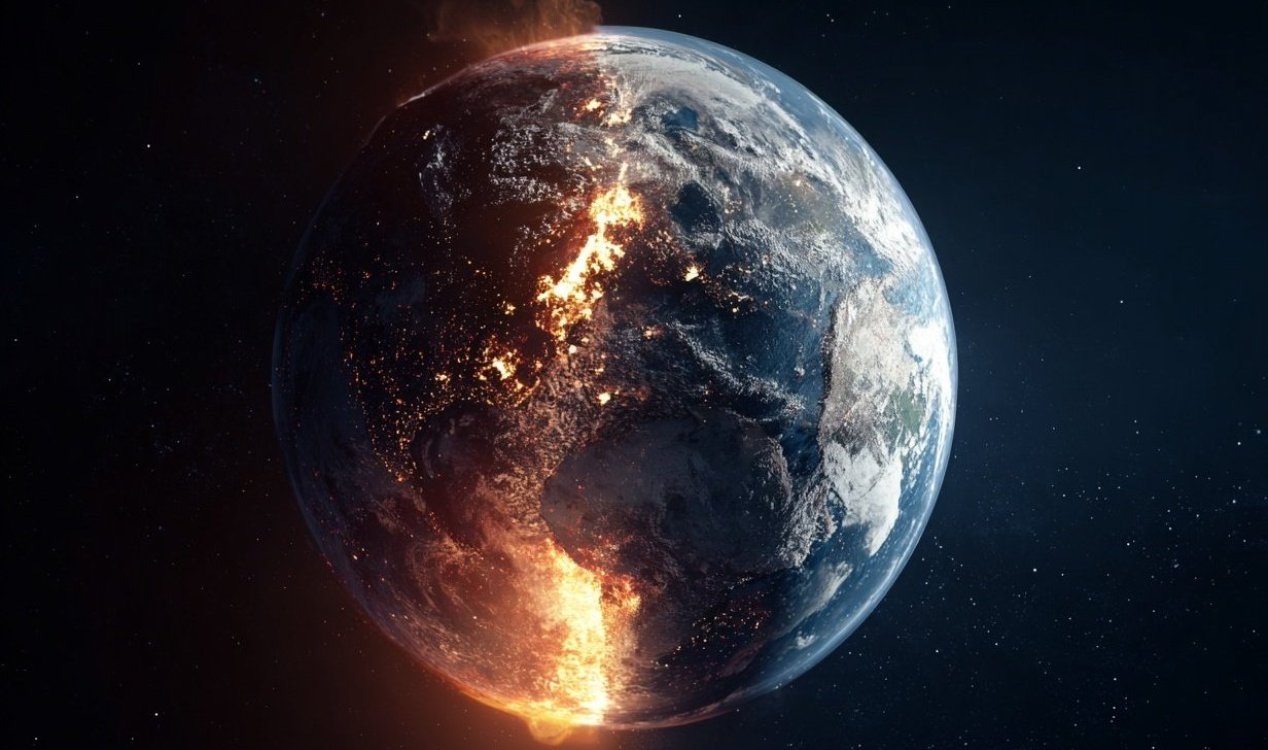
Image: AI-generated (Midjourney)
5 billion years from now, as the Sun begins to die, it will grow several times larger than it is now, effectively cooking the Earth's surface in the process.
But the Earth will have become uninhabitable long before then.
Now, thanks to a supercomputer and a collaboration between NASA and Toho University in Japan, researchers have been able to run complex models predicting the distant future of our planet.
The main issue is that, over time, the Sun will become brighter and larger long before it gets to the point of turning into a red giant, triggering major climate shifts on our planet.
According to the team's calculations, the Earth will become effectively uninhabitable in just over one billion years - with the planet becoming so hot that the oceans will literally evaporate.
That said, much of this is a moot point because the amounts of time we're talking about here are so vast that our civilization - if it even still exists by then - will have changed beyond recognition.
After one billion years of time and evolution, would we even still be 'human' at all ?
Source: Daily Galaxy
NASA supercomputer reveals when Earth will become uninhabitable
By T.K. RandallOctober 20, 2025
Image: AI-generated (Midjourney)
We've known for a long time that the Earth won't remain habitable forever, but how long does it really have?
The Earth remains the only example of a habitable world that we know of, but its continued habitability relies on a range of factors, including one that we can do absolutely nothing about.5 billion years from now, as the Sun begins to die, it will grow several times larger than it is now, effectively cooking the Earth's surface in the process.
But the Earth will have become uninhabitable long before then.
Now, thanks to a supercomputer and a collaboration between NASA and Toho University in Japan, researchers have been able to run complex models predicting the distant future of our planet.
According to the team's calculations, the Earth will become effectively uninhabitable in just over one billion years - with the planet becoming so hot that the oceans will literally evaporate.
That said, much of this is a moot point because the amounts of time we're talking about here are so vast that our civilization - if it even still exists by then - will have changed beyond recognition.
After one billion years of time and evolution, would we even still be 'human' at all ?
Source: Daily Galaxy
Similar stories based on this topic:



The Unexplained Mysteries
Book of Weird News
AVAILABLE NOW
Take a walk on the weird side with this compilation of some of the weirdest stories ever to grace the pages of a newspaper.
Click here to learn more

Support us on Patreon
BONUS CONTENTFor less than the cost of a cup of coffee, you can gain access to a wide range of exclusive perks including our popular 'Lost Ghost Stories' series.
Click here to learn more

1 week
2 weeks
3 weeks
1 month


This week
This month
All time
| - | 1. | Pareidolia |
 |
2. | Loch Ness Monster |
|
3. | Ghost |
 |
4. | Electronic Voice Phenomenon |
|
5. | Yeti |
|
6. | Area 51 |
|
7. | Paranormal |
| - | 8. | Spirit Photography (Classic) |
|
9. | Orb |
| - | 10. | Storm Area 51 |


Top | Home | Forum
News | Columns | Encyclopedia


UM 11.3 Unexplained-Mysteries.com (c) 2001-2026
Terms | Privacy Policy | Cookies | Contact
News | Columns | Encyclopedia
UM 11.3 Unexplained-Mysteries.com (c) 2001-2026
Terms | Privacy Policy | Cookies | Contact