





Space & Astronomy
November 6, 2025


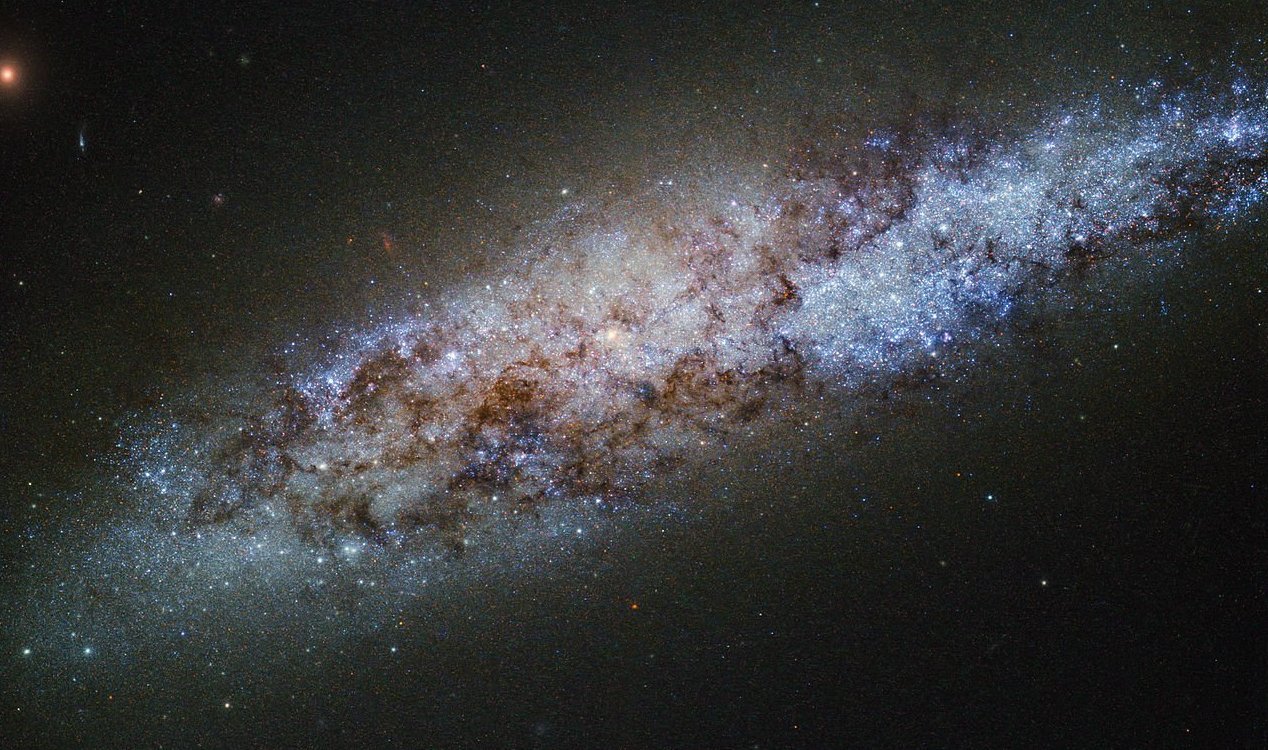
Image: The Scale of the Universe
Credit: ESA/Hubble/D. Calzetti et al. / CC BY 4.0 (adapted)
More recently, observations by modern telescopes have indicated that the universe isn't just expanding but is actually doing so at an ever accelerating rate.
Now, however, new research has turned this idea on its head - instead indicating that the expansion of the universe is not actually accelerating at all but is in fact getting slower.
There is also evidence to suggest that dark energy - the mysterious form of energy thought to be responsible for the universe's expansion - is getting weaker over time.
"Our study shows that the universe has already entered a phase of decelerated expansion at the present epoch and that dark energy evolves with time much more rapidly than previously thought," said study lead author Prof Young-Wook Lee of Yonsei University in South Korea.
"If these results are confirmed, it would mark a major paradigm shift in cosmology since the discovery of dark energy 27 years ago."
The new research calls into question the original method used to determine that the universe's expansion is accelerating, which involved observations of certain types of exploding stars.
At the time, it was assumed that the light emitted by these objects was uniform and thus it was possible to calculate how fast different parts of the universe were receding.
Now, though, scientists argue that the differences in light observed from these objects may simply be down to natural variations, thus invalidating the original accelerated expansion idea.
By contrast, their own recent findings seem to suggest that the complete opposite is happening.
Further analysis and study, however, will be needed to confirm whether or not this is truly the case.
Source: The Guardian
The expansion of the universe may be slowing down, new study claims
By T.K. RandallNovember 6, 2025
Image: The Scale of the Universe
Credit: ESA/Hubble/D. Calzetti et al. / CC BY 4.0 (adapted)
Physicists have cast doubt on the long-held notion that the expansion of the universe is accelerating.
Back in 1929, Edwin Hubble - the man after which the Hubble Space Telescope is named - observationally confirmed that the universe is not static but is in fact constantly expanding.More recently, observations by modern telescopes have indicated that the universe isn't just expanding but is actually doing so at an ever accelerating rate.
Now, however, new research has turned this idea on its head - instead indicating that the expansion of the universe is not actually accelerating at all but is in fact getting slower.
There is also evidence to suggest that dark energy - the mysterious form of energy thought to be responsible for the universe's expansion - is getting weaker over time.
"Our study shows that the universe has already entered a phase of decelerated expansion at the present epoch and that dark energy evolves with time much more rapidly than previously thought," said study lead author Prof Young-Wook Lee of Yonsei University in South Korea.
The new research calls into question the original method used to determine that the universe's expansion is accelerating, which involved observations of certain types of exploding stars.
At the time, it was assumed that the light emitted by these objects was uniform and thus it was possible to calculate how fast different parts of the universe were receding.
Now, though, scientists argue that the differences in light observed from these objects may simply be down to natural variations, thus invalidating the original accelerated expansion idea.
By contrast, their own recent findings seem to suggest that the complete opposite is happening.
Further analysis and study, however, will be needed to confirm whether or not this is truly the case.
Source: The Guardian
Similar stories based on this topic:



The Unexplained Mysteries
Book of Weird News
AVAILABLE NOW
Take a walk on the weird side with this compilation of some of the weirdest stories ever to grace the pages of a newspaper.
Click here to learn more

Support us on Patreon
BONUS CONTENTFor less than the cost of a cup of coffee, you can gain access to a wide range of exclusive perks including our popular 'Lost Ghost Stories' series.
Click here to learn more

1 week
2 weeks
3 weeks
1 month


This week
This month
All time
| - | 1. | Pareidolia |
 |
2. | Loch Ness Monster |
|
3. | Ghost |
 |
4. | Electronic Voice Phenomenon |
|
5. | Yeti |
|
6. | Area 51 |
|
7. | Paranormal |
| - | 8. | Spirit Photography (Classic) |
|
9. | Orb |
| - | 10. | Storm Area 51 |


Top | Home | Forum
News | Columns | Encyclopedia


UM 11.3 Unexplained-Mysteries.com (c) 2001-2026
Terms | Privacy Policy | Cookies | Contact
News | Columns | Encyclopedia
UM 11.3 Unexplained-Mysteries.com (c) 2001-2026
Terms | Privacy Policy | Cookies | Contact