





Space & Astronomy
April 9, 2015


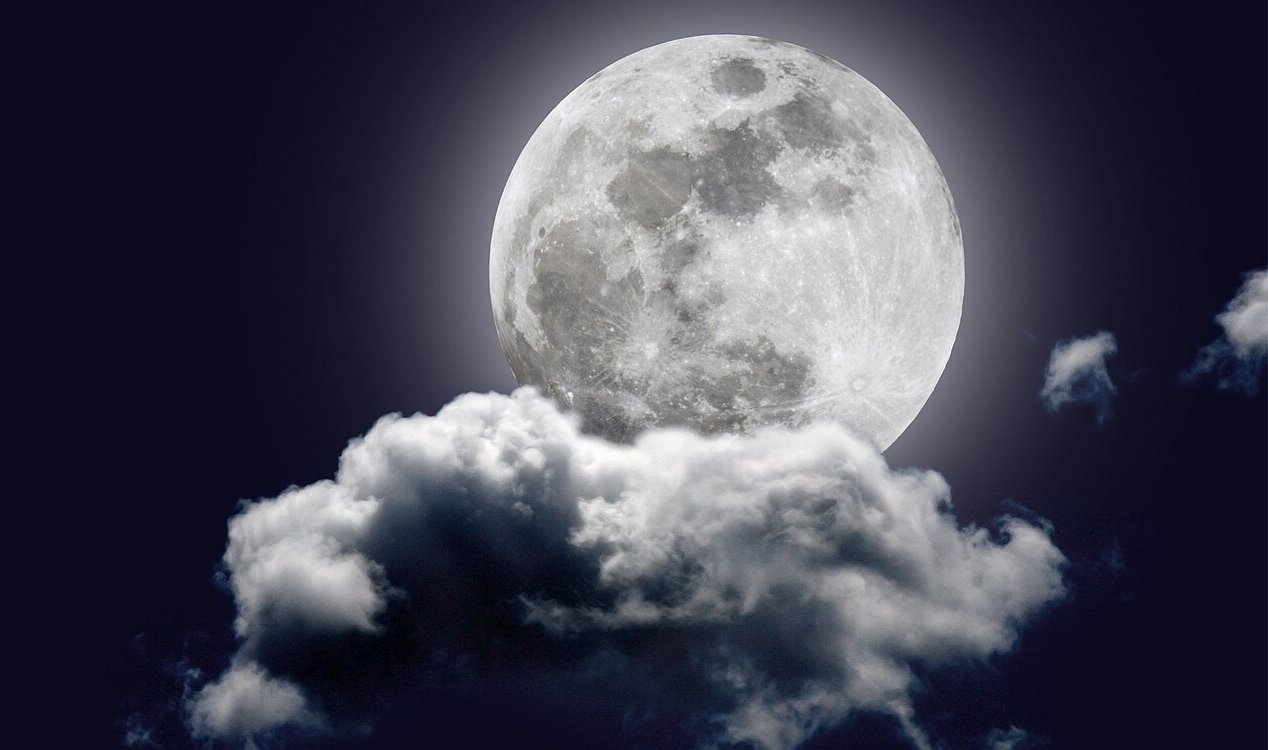
Image: Full Moon
Credit: Thom Rains / CC BY 3.0 (adapted)
The most commonly accepted theory suggests that the moon was created from the debris produced by a cataclysmic collision between the Earth and another Earth-sized world during the tumultuous early days of the solar system.
The main problem with this theory however is that the moon should be mostly composed of material from this second planet whereas in practice it is actually almost identical in composition to the Earth.
Now by running computer simulations of the collision Dr Hagai Perets and colleagues from the Technion-Israel Institute of Technology have discovered that the moon's composition could actually be explained by the impact scenario after all if the second planet was sufficiently similar to the Earth.
"What we found is that many of these impactors on a planet have very similar composition to that of the planets they impact - as similar as what we measure between the Earth and the Moon," said Dr Perets. "I am [now] even more confident about the giant impact hypothesis."
Two further studies conducted in the US and Germany also seemed to confirm that the composition of samples collected from the moon's surface supported the idea of a collision.
"The small, but significant, difference in the tungsten isotopic composition between Earth and the Moon perfectly corresponds to the different amounts of material gathered by Earth and the moon post-impact," said Prof Richard Walker from the University of Maryland.
Source: BBC News
Moon formation theory gets a new boost
By T.K. RandallApril 9, 2015
Image: Full Moon
Credit: Thom Rains / CC BY 3.0 (adapted)
Several new studies appear to support the idea that the moon formed after a collision between two worlds.
Despite being our nearest neighbor there is still a lot that we do not know about the moon. The process that led to its formation, an event that is believed to have occurred around 4.5 billion years ago, has always remained something of a mystery.The most commonly accepted theory suggests that the moon was created from the debris produced by a cataclysmic collision between the Earth and another Earth-sized world during the tumultuous early days of the solar system.
The main problem with this theory however is that the moon should be mostly composed of material from this second planet whereas in practice it is actually almost identical in composition to the Earth.
"What we found is that many of these impactors on a planet have very similar composition to that of the planets they impact - as similar as what we measure between the Earth and the Moon," said Dr Perets. "I am [now] even more confident about the giant impact hypothesis."
Two further studies conducted in the US and Germany also seemed to confirm that the composition of samples collected from the moon's surface supported the idea of a collision.
"The small, but significant, difference in the tungsten isotopic composition between Earth and the Moon perfectly corresponds to the different amounts of material gathered by Earth and the moon post-impact," said Prof Richard Walker from the University of Maryland.
Source: BBC News




The Unexplained Mysteries
Book of Weird News
AVAILABLE NOW
Take a walk on the weird side with this compilation of some of the weirdest stories ever to grace the pages of a newspaper.
Click here to learn more

Support us on Patreon
BONUS CONTENTFor less than the cost of a cup of coffee, you can gain access to a wide range of exclusive perks including our popular 'Lost Ghost Stories' series.
Click here to learn more
Israel, Palestine and the Middle-East

United States and the Americas
Site News and Announcements
Other World News
Total Posts: 7,573,692 Topics: 329,836 Members: 204,502
Not a member yet ? Click here to join - registration is free and only takes a moment!
Not a member yet ? Click here to join - registration is free and only takes a moment!

1 week
2 weeks
3 weeks
1 month


This week
This month
All time
| - | 1. | Orb |
| - | 2. | Bigfoot |
 |
3. | Pareidolia |
|
4. | Paranormal |
|
5. | Extraterrestrial |
 |
6. | Electronic Voice Phenomenon |
|
7. | Spirit Photography (Classic) |
| - | 8. | Unidentified Flying Object |
|
9. | Phoenix Lights |
|
10. | Roswell Incident |


Top | Home | Forum
News | Columns | Encyclopedia


UM 11.2a Unexplained-Mysteries.com (c) 2001-2026
Terms | Privacy Policy | Cookies | Contact
News | Columns | Encyclopedia
UM 11.2a Unexplained-Mysteries.com (c) 2001-2026
Terms | Privacy Policy | Cookies | Contact