






Planet 'remarkably similar to Earth' found 146 light-years away
Jan 31, 2026Another potentially habitable world has been discovered thanks to data collected by the Kepler Space Telescope.
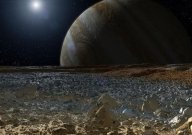
NASA's Juno probe has measured the thickness of Europa's icy crust
Jan 30, 2026The icy Jovian moon has long been a place of interest for scientists due to its subterranean ocean of liquid water.
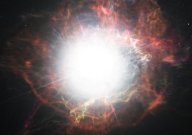
Astronomers detect a mysterious signal from the beginning of time
Jan 16, 2026A signal lasting just 10 seconds is thought to have originated from one of the most distant sources ever detected.
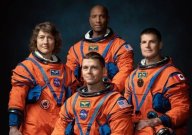
Manned lunar mission on track to launch in less than four weeks
Jan 11, 2026The first manned mission to orbit the Moon in decades is still on course to launch as early as February 6th.
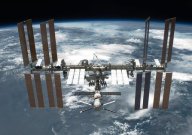
NASA orders space station medical evacuation for first time ever
Jan 9, 2026A return trip to Earth will be happening sooner than planned after an astronaut became unwell with a 'serious' illness.
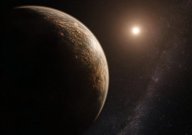
Mysterious rogue planet discovered in the interstellar void
Jan 3, 2026Astronomers have detected an enigmatic free floating planet approximately 10,000 light-years from Earth.

Trump lays out ambitious timetable for America's return to the Moon
Dec 21, 2025The first human to set foot on the lunar surface in more than five decades could do so sooner than you think.
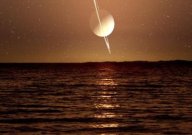
No ocean, say scientists, but Titan's 'slushy tunnels' could still harbor life
Dec 19, 2025Saturn's moon Titan may be home to habitable subterranean pockets of liquid water.
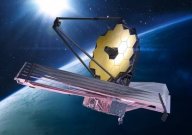
Astronomers have discovered a planet that is the shape of a lemon
Dec 18, 2025The mysterious extrasolar world was spotted with the help of NASA's James Webb Space Telescope.

US Space Force reveals new naming scheme for its weapon systems
Dec 15, 2025The youngest branch of the US military has revealed its new naming scheme at a conference in Florida.
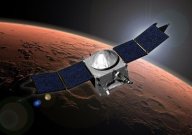
Mystery as NASA probe suddenly falls silent in orbit around Mars
Dec 12, 2025A spacecraft that has been in orbit around Mars for over a decade has suddenly stopped communicating.
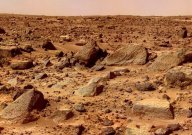
Scientists detect lightning in the atmosphere of Mars for the first time
Nov 29, 2025New evidence suggests that the Red Planet is capable of producing lightning - something never seen there before.
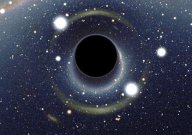
This is what would happen if a 100-billion-ton black hole hit you
Nov 25, 2025Have you ever wondered what would happen if a black hole of a certain size passed through you ?
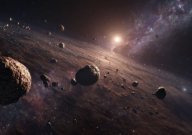
Scientists discover a second anomalous 'kernel' in the Kuiper Belt
Nov 22, 2025The discovery centers on a particular section of the Kuiper Belt that appears to be denser than the areas around it.
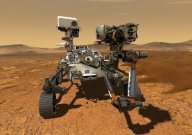
NASA discovers out-of-place rock on the surface of Mars
Nov 21, 2025The space agency's Perseverance rover recently came across a strange rock on Mars that didn't seem to belong there.
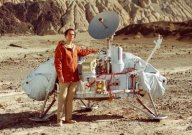
Carl Sagan left a poignant message on Mars for future explorers to find
VIDEO Nov 18, 2025The late astronomer arranged for a special message to be sent to Mars for the benefit of the first people to set foot there.
The expansion of the universe may be slowing down, new study claims
Nov 6, 2025Physicists have cast doubt on the long-held notion that the expansion of the universe is accelerating.

Researchers mathematically disprove simulated universe theory
Nov 4, 2025Scientists now believe that they have finally disproven the idea that we are all living in a simulated universe.
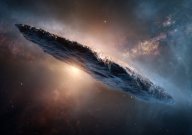
Two spacecraft are poised to fly right through the tail of 3I/ATLAS
Oct 26, 2025As luck would have it, two existing space probes happen to be perfectly positioned to investigate the object's tail.
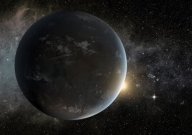
Astronomers discover nearby, potentially habitable 'Super-Earth'
Oct 23, 2025Situated just 18.2 light-years away, this newfound extrasolar world is in orbit around a red dwarf star.



News | Columns | Encyclopedia


UM 11.3 Unexplained-Mysteries.com (c) 2001-2026
Terms | Privacy Policy | Cookies | Contact