





Space & Astronomy
October 26, 2025


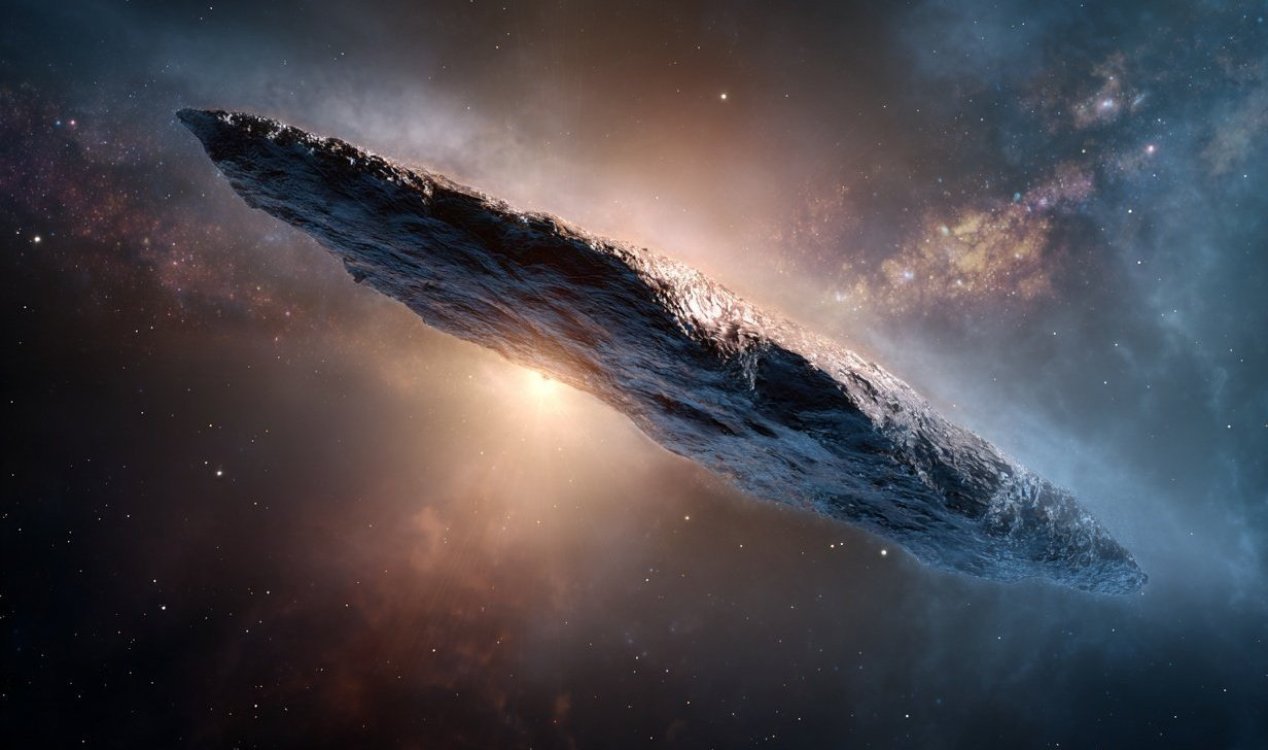
Image: AI-generated (Midjourney)
While efforts have been made recently to gather as much data about this intriguing visitor as possible, the best photographs we have are rather indistinct, making it difficult to get a clear image of 3I/ATLAS and clear up the debate over its nature and origin once and for all.
Now, though, a lucky break may have presented itself.
In a new paper, scientists have revealed that two existing space probes - ESA's Hera (which is heading to the binary asteroid Didymos-Dimorphos) and NASA's Europa Clipper (which is heading to Jupiter's icy moon) - will actually be passing 'downwind' of 3I/ATLAS within the next few weeks, giving them an opportunity to detect ions from the object's tail.
The trouble is, neither of these spacecraft were designed to analyze comet tails, so adapting their existing missions to accomplish this in such a short time will prove very challenging.
Also, only Europa Clipper has the instrumentation capable of detecting ions in the tail at all.
Whether NASA will want to risk the probe's existing mission for the chance to further investigate 3I/ATLAS, however, remains to be seen.
Given that it continues to get nearer, we may not have too much longer to wait before we can find out for sure if there really is anything strange about this curious interstellar visitor.
As things stand, it will reach its closest approach of the Earth on December 19th.
Source: Live Science
Two spacecraft are poised to fly right through the tail of 3I/ATLAS
By T.K. RandallOctober 26, 2025
Image: AI-generated (Midjourney)
As luck would have it, two existing space probes happen to be perfectly positioned to investigate the object's tail.
By now, 3I/ATLAS needs little introduction - this curious interstellar interloper, which is currently passing through our solar system, has been at the center of a great deal of debate and speculation for months, with most scientists arguing that it is simply a comet and others - such as Harvard's Prof Avi Loeb - raising the possibility that it is in fact an object controlled by an advanced extraterrestrial civilization.While efforts have been made recently to gather as much data about this intriguing visitor as possible, the best photographs we have are rather indistinct, making it difficult to get a clear image of 3I/ATLAS and clear up the debate over its nature and origin once and for all.
Now, though, a lucky break may have presented itself.
In a new paper, scientists have revealed that two existing space probes - ESA's Hera (which is heading to the binary asteroid Didymos-Dimorphos) and NASA's Europa Clipper (which is heading to Jupiter's icy moon) - will actually be passing 'downwind' of 3I/ATLAS within the next few weeks, giving them an opportunity to detect ions from the object's tail.
Also, only Europa Clipper has the instrumentation capable of detecting ions in the tail at all.
Whether NASA will want to risk the probe's existing mission for the chance to further investigate 3I/ATLAS, however, remains to be seen.
Given that it continues to get nearer, we may not have too much longer to wait before we can find out for sure if there really is anything strange about this curious interstellar visitor.
As things stand, it will reach its closest approach of the Earth on December 19th.
Source: Live Science
Similar stories based on this topic:



The Unexplained Mysteries
Book of Weird News
AVAILABLE NOW
Take a walk on the weird side with this compilation of some of the weirdest stories ever to grace the pages of a newspaper.
Click here to learn more

Support us on Patreon
BONUS CONTENTFor less than the cost of a cup of coffee, you can gain access to a wide range of exclusive perks including our popular 'Lost Ghost Stories' series.
Click here to learn more

1 week
2 weeks
3 weeks
1 month


This week
This month
All time
| - | 1. | Pareidolia |
 |
2. | Loch Ness Monster |
| - | 3. | Yeti |
|
4. | Ghost |
 |
5. | Electronic Voice Phenomenon |
|
6. | Area 51 |
|
7. | Spirit Photography (Classic) |
|
8. | Paranormal |
|
9. | Orb |
| - | 10. | Storm Area 51 |


Top | Home | Forum
News | Columns | Encyclopedia


UM 11.3 Unexplained-Mysteries.com (c) 2001-2026
Terms | Privacy Policy | Cookies | Contact
News | Columns | Encyclopedia
UM 11.3 Unexplained-Mysteries.com (c) 2001-2026
Terms | Privacy Policy | Cookies | Contact