





Creatures, Myths & Legends
February 24, 2015


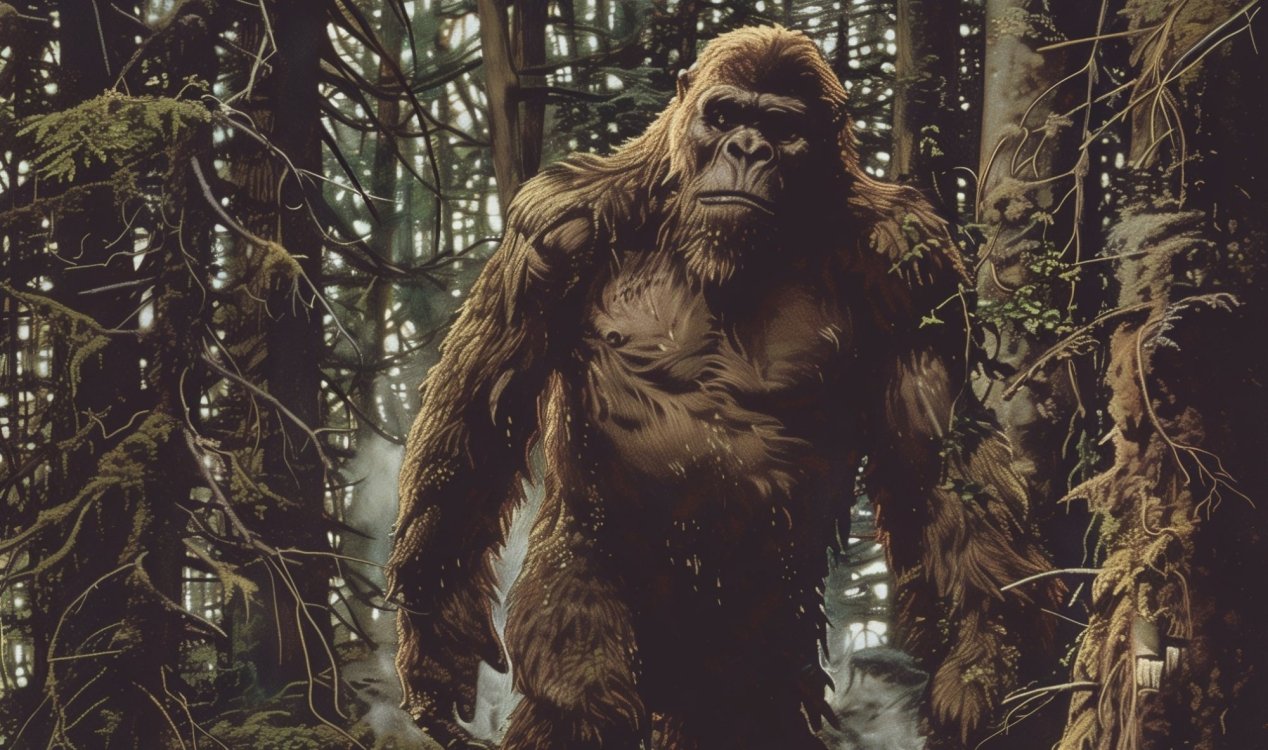
Image: AI-generated (Midjourney)
For one experiment a volunteer dressed up in a Bigfoot costume and skulked around the Royal Botanic Garden in Edinburgh, a site that was chosen due to its abundance of Redwoods which are common in the US forests where the creature is typically sighted.
Visitors to the garden were divided up in to two groups, one that was sent on a route that would guarantee an encounter with the fake creature and one that wasn't. Both were then asked to write a report about what they'd experienced once they'd completed the trip.
"It's a serious study of people reporting things," said statistical ecologist Dr Charles Paxton who previously cataloged every recorded sighting of the Loch Ness Monster.
"I'm trying to see if there are statistical patterns. All my work gets published in proper scientific journals. All I do is with the aim of getting proper results."
Source: Sunday Post
Fake monsters in creature report experiment
By T.K. RandallFebruary 24, 2015
Image: AI-generated (Midjourney)
Researchers used volunteers dressed up in monster costumes to investigate how people reported sightings.
A team from the University of St Andrews in Fife, Scotland have been conducting a series of experiments to better understand how people react to sightings of cryptozoological creatures.For one experiment a volunteer dressed up in a Bigfoot costume and skulked around the Royal Botanic Garden in Edinburgh, a site that was chosen due to its abundance of Redwoods which are common in the US forests where the creature is typically sighted.
"It's a serious study of people reporting things," said statistical ecologist Dr Charles Paxton who previously cataloged every recorded sighting of the Loch Ness Monster.
"I'm trying to see if there are statistical patterns. All my work gets published in proper scientific journals. All I do is with the aim of getting proper results."
Source: Sunday Post
Similar stories based on this topic:



The Unexplained Mysteries
Book of Weird News
AVAILABLE NOW
Take a walk on the weird side with this compilation of some of the weirdest stories ever to grace the pages of a newspaper.
Click here to learn more

Support us on Patreon
BONUS CONTENTFor less than the cost of a cup of coffee, you can gain access to a wide range of exclusive perks including our popular 'Lost Ghost Stories' series.
Click here to learn more

1 week
2 weeks
3 weeks
1 month


This week
This month
All time
| - | 1. | Pareidolia |
 |
2. | Loch Ness Monster |
|
3. | Ghost |
 |
4. | Electronic Voice Phenomenon |
|
5. | Yeti |
|
6. | Area 51 |
|
7. | Paranormal |
| - | 8. | Spirit Photography (Classic) |
|
9. | Orb |
| - | 10. | Storm Area 51 |


Top | Home | Forum
News | Columns | Encyclopedia


UM 11.3 Unexplained-Mysteries.com (c) 2001-2026
Terms | Privacy Policy | Cookies | Contact
News | Columns | Encyclopedia
UM 11.3 Unexplained-Mysteries.com (c) 2001-2026
Terms | Privacy Policy | Cookies | Contact