





Modern Mysteries
April 25, 2017


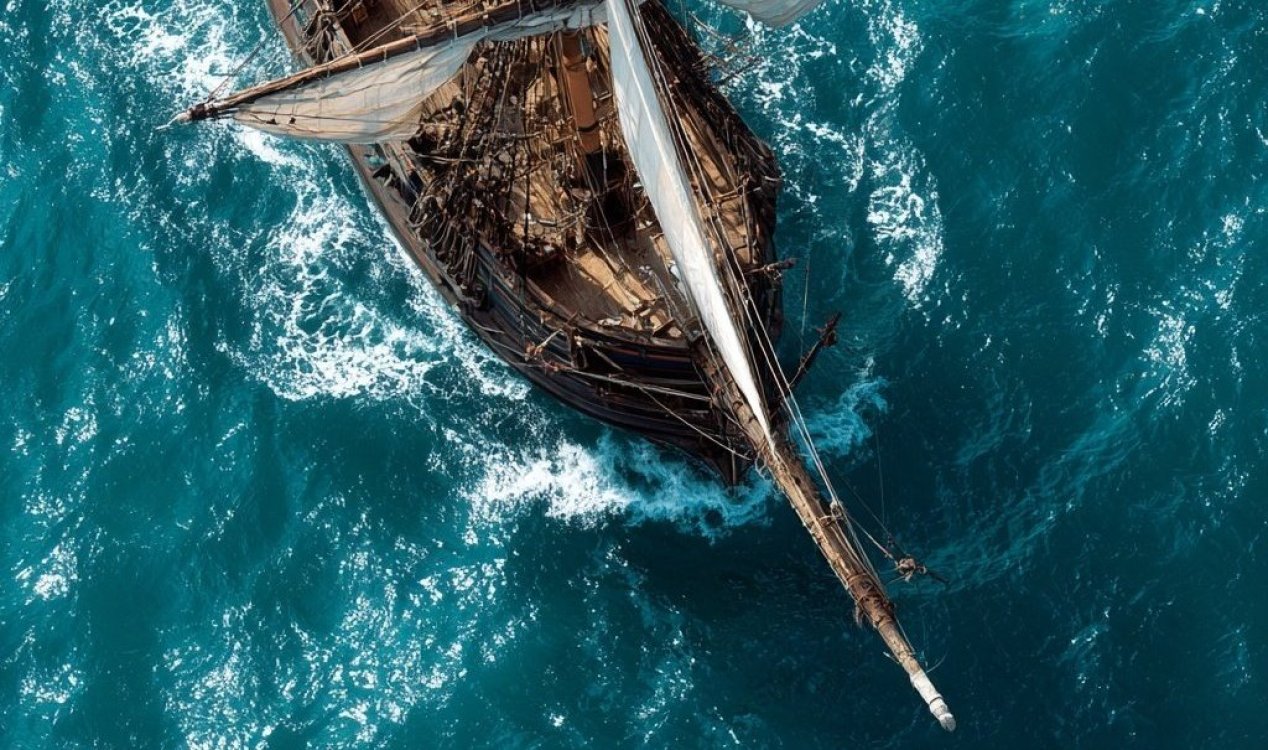
Image: AI-generated (Midjourney)
The wreckage, which had remained lost for over 170 years, was finally located last year 24 meters underwater off the coast of King William Island in the Canadian Arctic Archipelago.
The skeletons being analyzed for DNA samples were found, not in the wreckage, but in small boats and campsites along the ship's route - an indication that the crew had attempted to reach safety.
The research team, which is led by Douglas Stenton of Nunavut's Department of Culture and Heritage, hopes to eventually identify each crew member and learn more about what happened.
"We have been in touch with several descendants who have expressed interest in participating in further research," said Stenton. "We hope that the publication of our initial study will encourage other descendants to also consider participating."
Source: Live Science
Scientists retrieve DNA of HMS Terror crew
By T.K. RandallApril 25, 2017
Image: AI-generated (Midjourney)
A new study is aiming to identify some of the sailors who died during the ill-fated Arctic expedition.
Under the command of Sir John Franklin, the HMS Terror had originally set out for the Arctic in an attempt to traverse the Northwest Passage, but when the ice turned out to be much thicker than expected the vessel became hopelessly stuck and all 129 men on board ultimately perished.The wreckage, which had remained lost for over 170 years, was finally located last year 24 meters underwater off the coast of King William Island in the Canadian Arctic Archipelago.
The research team, which is led by Douglas Stenton of Nunavut's Department of Culture and Heritage, hopes to eventually identify each crew member and learn more about what happened.
"We have been in touch with several descendants who have expressed interest in participating in further research," said Stenton. "We hope that the publication of our initial study will encourage other descendants to also consider participating."
Source: Live Science
Similar stories based on this topic:



The Unexplained Mysteries
Book of Weird News
AVAILABLE NOW
Take a walk on the weird side with this compilation of some of the weirdest stories ever to grace the pages of a newspaper.
Click here to learn more

Support us on Patreon
BONUS CONTENTFor less than the cost of a cup of coffee, you can gain access to a wide range of exclusive perks including our popular 'Lost Ghost Stories' series.
Click here to learn more

1 week
2 weeks
3 weeks
1 month


This week
This month
All time
| - | 1. | Loch Ness Monster |
 |
2. | Paranormal |
|
3. | Ghost |
 |
4. | Electronic Voice Phenomenon |
|
5. | Area 51 |
|
6. | Storm Area 51 |
|
7. | Bigfoot |
| - | 8. | Spirit Photography (Classic) |
|
9. | Orb |
|
10. | Pareidolia |


Top | Home | Forum
News | Columns | Encyclopedia


UM 11.3 Unexplained-Mysteries.com (c) 2001-2026
Terms | Privacy Policy | Cookies | Contact
News | Columns | Encyclopedia
UM 11.3 Unexplained-Mysteries.com (c) 2001-2026
Terms | Privacy Policy | Cookies | Contact