





Space & Astronomy
August 16, 2025


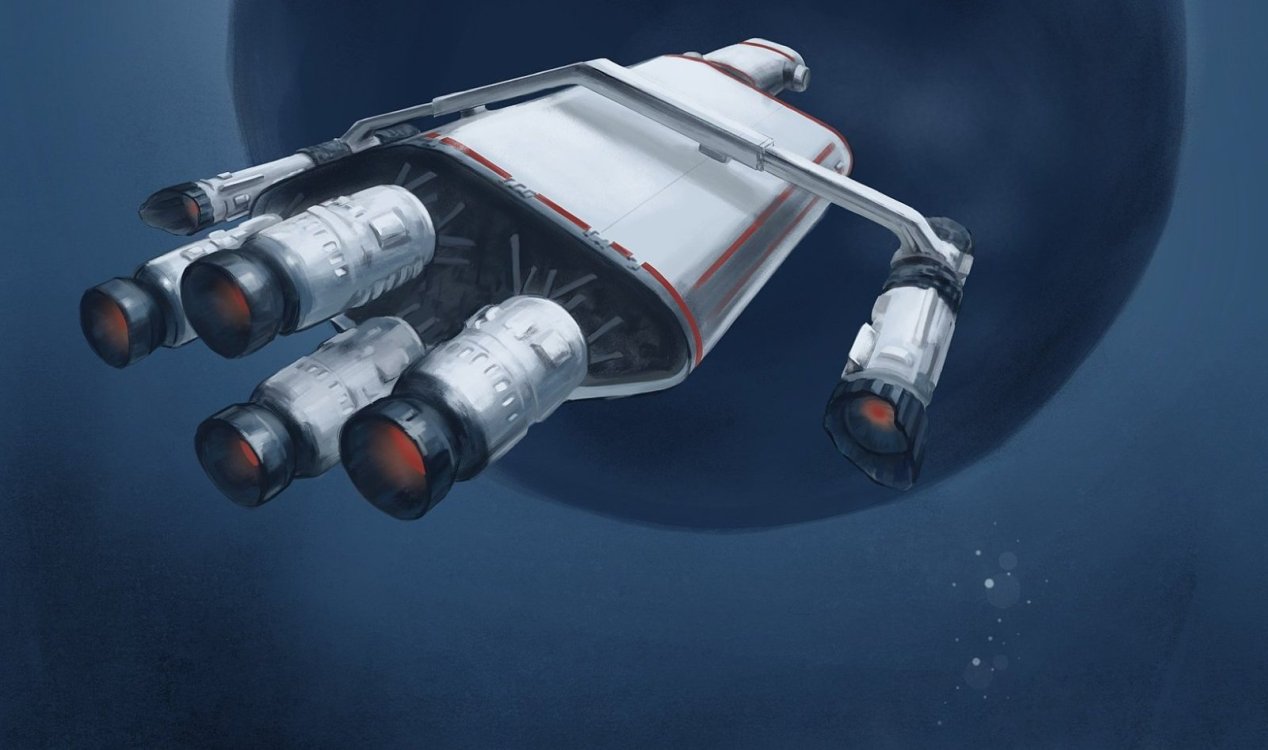
Image: Science Fiction Starship
Credit: Alorin / CC BY-SA 3.0 (adapted)
This is the idea behind Chrysalis - a hypothetical spacecraft designed to make it possible for humans to reach distant, potentially habitable exoplanets such as Proxima Centauri b.
Forget suspended animation or faster-than-light travel, though - Chrysalis would work by harboring multiple generations and a self-contained society that would need to endure for centuries.
When the ship finally arrived, those on-board would be the descendants of those who boarded.
The moral implications are many. Imagine being born into one of the middle generations - doomed to spend your entire life aboard the ship with no hope of ever seeing the Earth and no hope of living long enough to reach the vessel's destination.
Could social cohesion be maintained under such circumstances ? Could we assume that multiple generations will actually co-operate and accept, without choice, the fate they were born into ?
Would you join such a mission knowing that its success hinges entirely on the total commitment of your children, grandchildren, great grandchildren and beyond ?
And what would happen, if upon reaching Proxima Centauri b, it turned out that the planet wasn't suitable to colonize ? What if there was a critical technical fault half way through the journey ?
The risks (and commitment) of joining such a mission are almost beyond imagining.
Source: Live Science
Generational ship 'Chrysalis' would take 400 years to reach nearest star
By T.K. RandallAugust 16, 2025
Image: Science Fiction Starship
Credit: Alorin / CC BY-SA 3.0 (adapted)
A prize-winning, hypothetical spacecraft could be the key to enabling humans to colonize distant worlds.
Imagine boarding a spacecraft alongside 2,400 other people to embark on a 400-year journey that will take you to a destination situated more than 25 trillion miles away.This is the idea behind Chrysalis - a hypothetical spacecraft designed to make it possible for humans to reach distant, potentially habitable exoplanets such as Proxima Centauri b.
Forget suspended animation or faster-than-light travel, though - Chrysalis would work by harboring multiple generations and a self-contained society that would need to endure for centuries.
When the ship finally arrived, those on-board would be the descendants of those who boarded.
Could social cohesion be maintained under such circumstances ? Could we assume that multiple generations will actually co-operate and accept, without choice, the fate they were born into ?
Would you join such a mission knowing that its success hinges entirely on the total commitment of your children, grandchildren, great grandchildren and beyond ?
And what would happen, if upon reaching Proxima Centauri b, it turned out that the planet wasn't suitable to colonize ? What if there was a critical technical fault half way through the journey ?
The risks (and commitment) of joining such a mission are almost beyond imagining.
Source: Live Science
Similar stories based on this topic:



The Unexplained Mysteries
Book of Weird News
AVAILABLE NOW
Take a walk on the weird side with this compilation of some of the weirdest stories ever to grace the pages of a newspaper.
Click here to learn more

Support us on Patreon
BONUS CONTENTFor less than the cost of a cup of coffee, you can gain access to a wide range of exclusive perks including our popular 'Lost Ghost Stories' series.
Click here to learn more

1 week
2 weeks
3 weeks
1 month


This week
This month
All time
| - | 1. | Pareidolia |
 |
2. | Loch Ness Monster |
| - | 3. | Yeti |
|
4. | Ghost |
 |
5. | Electronic Voice Phenomenon |
|
6. | Area 51 |
|
7. | Spirit Photography (Classic) |
|
8. | Paranormal |
|
9. | Orb |
| - | 10. | Storm Area 51 |


Top | Home | Forum
News | Columns | Encyclopedia


UM 11.3 Unexplained-Mysteries.com (c) 2001-2026
Terms | Privacy Policy | Cookies | Contact
News | Columns | Encyclopedia
UM 11.3 Unexplained-Mysteries.com (c) 2001-2026
Terms | Privacy Policy | Cookies | Contact