





Space & Astronomy
September 25, 2025


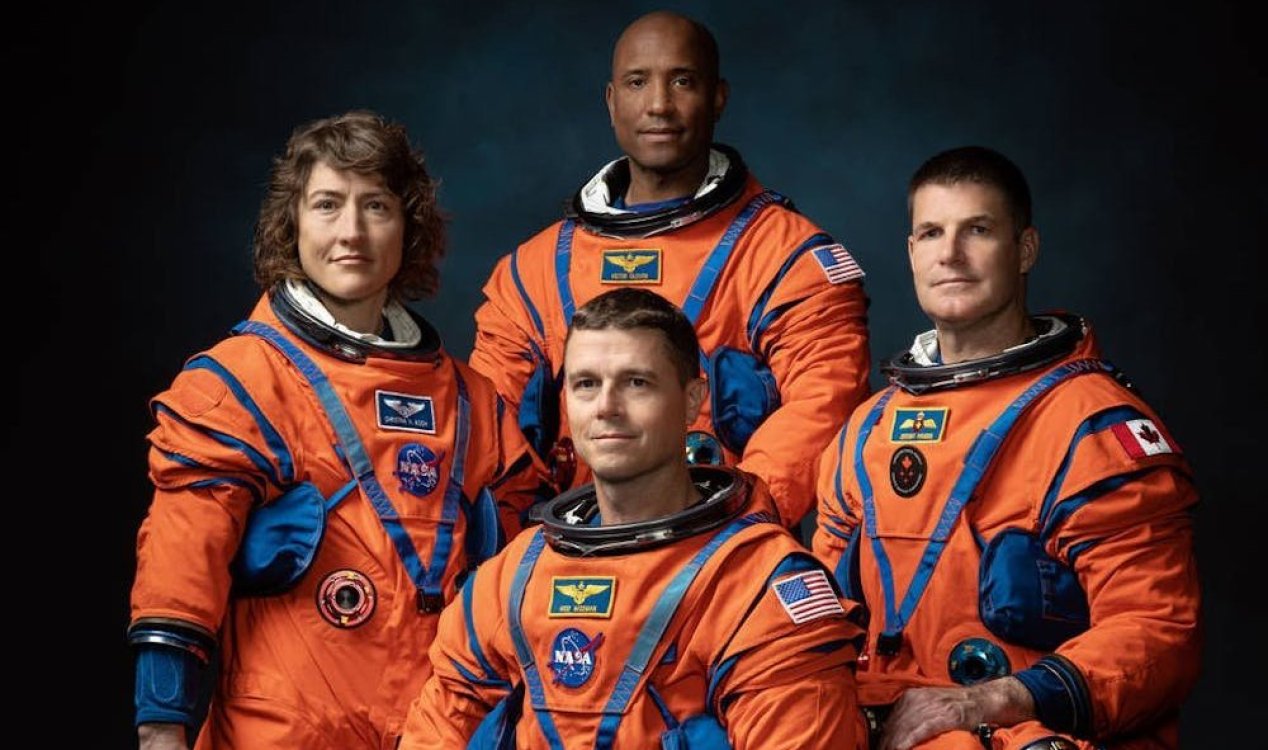
Image: Artemis 2 Crew Portrait
Credit: Josh Valcarcel / (PD) NASA
While Artemis II won't actually land on the surface (that will be the next mission after this one), the flight will see a crew of four astronauts spend over a week in space to test out all the technology.
"We together have a front row seat to history," said NASA's acting deputy associate administrator Lakiesha Hawkins.
"The launch window could open as early as the fifth of February, but we want to emphasize that safety is our top priority."
The astronauts going on the mission will be NASA's Reid Wiseman, Victor Glover and Christina Koch, as well as Jeremy Hansen of the Canadian Space Agency.
They will be the first humans to venture beyond near-Earth orbit since 1972.
"They're going at least 5,000 nautical miles (9,200Km) past the Moon, which is much higher than previous missions have gone," said lead Artemis II flight director Jeff Radigan.
If successful, Artemis II will pave the way for Artemis III - the actual manned Moon landing - which should take place sometime before the end of the decade.
Source: BBC News
Artemis II manned lunar mission set to launch in February 2026
By T.K. RandallSeptember 25, 2025
Image: Artemis 2 Crew Portrait
Credit: Josh Valcarcel / (PD) NASA
A crew of four astronauts will embark on a ten-day trip around the Moon at the beginning of next year.
It's finally happening - more than 50 years after the last human set foot on the lunar surface, NASA's Artemis program is finally about to send astronauts back to the Moon.While Artemis II won't actually land on the surface (that will be the next mission after this one), the flight will see a crew of four astronauts spend over a week in space to test out all the technology.
"We together have a front row seat to history," said NASA's acting deputy associate administrator Lakiesha Hawkins.
"The launch window could open as early as the fifth of February, but we want to emphasize that safety is our top priority."
They will be the first humans to venture beyond near-Earth orbit since 1972.
"They're going at least 5,000 nautical miles (9,200Km) past the Moon, which is much higher than previous missions have gone," said lead Artemis II flight director Jeff Radigan.
If successful, Artemis II will pave the way for Artemis III - the actual manned Moon landing - which should take place sometime before the end of the decade.
Source: BBC News
Similar stories based on this topic:



The Unexplained Mysteries
Book of Weird News
AVAILABLE NOW
Take a walk on the weird side with this compilation of some of the weirdest stories ever to grace the pages of a newspaper.
Click here to learn more

Support us on Patreon
BONUS CONTENTFor less than the cost of a cup of coffee, you can gain access to a wide range of exclusive perks including our popular 'Lost Ghost Stories' series.
Click here to learn more

1 week
2 weeks
3 weeks
1 month


This week
This month
All time
| - | 1. | Pareidolia |
 |
2. | Loch Ness Monster |
| - | 3. | Yeti |
|
4. | Ghost |
 |
5. | Electronic Voice Phenomenon |
|
6. | Area 51 |
|
7. | Spirit Photography (Classic) |
|
8. | Paranormal |
|
9. | Orb |
| - | 10. | Storm Area 51 |


Top | Home | Forum
News | Columns | Encyclopedia


UM 11.3 Unexplained-Mysteries.com (c) 2001-2026
Terms | Privacy Policy | Cookies | Contact
News | Columns | Encyclopedia
UM 11.3 Unexplained-Mysteries.com (c) 2001-2026
Terms | Privacy Policy | Cookies | Contact