





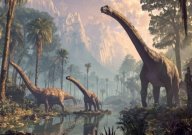
Plant-eating dinosaurs sometimes ate crabs
Sep 24, 2017Fossilized droppings have revealed that some herbivorous dinosaurs occasionally snacked on seafood.
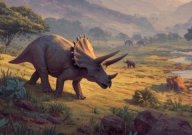
Giant prehistoric frog ate small dinosaurs
Sep 21, 2017At the size of a beach ball, the monster-sized Beelzebufo ampinga was the largest frog that ever lived.

550 million-year-old creature mystery solved
Sep 20, 2017Scientists believe that they have finally worked out what type of creature 'Dickinsonia' actually was.
Prehistoric whales were ferocious predators
Aug 30, 2017The ancestors of today's blue whales were deadly predators with rows of large, razor-sharp teeth.

Largest known Ichthyosaurus was pregnant
Aug 28, 2017Palaeontologists have discovered an enormous Ichthyosaurus specimen in a German museum collection.

Extinct toothless dwarf dolphin unveiled
Aug 23, 2017Scientists have identified an extinct species of mini-dolphin that lived over 30 million years ago.
'Frankenstein dinosaur' is 'missing link'
Aug 16, 2017The mystery surrounding a dinosaur made up of various mismatched body parts has finally been solved.
13 million-year-old human ancestor unearthed
Aug 10, 2017Palaeontologists have discovered the skull of what is thought to be mankind's earliest known ancestor.
World's largest ever dinosaur identified
VIDEO Aug 9, 2017A 70-ton titanosaur has been officially established as the largest land animal ever to walk the Earth.
Heavily armored dinosaurs also had camouflage
Aug 5, 2017Dinosaurs equipped with spikes and bony plates may have also employed camouflage to avoid predators.
Could a human actually outrun a T. rex ?
Jul 17, 2017Contrary to the plot of Jurassic Park, a rampaging Tyrannosaurus rex wouldn't actually move very fast.
Giant prehistoric crocodile had T. rex teeth
Jul 4, 2017Palaeontologists have been studying the remains of a crocodile-like land predator from the Jurassic era.

Intense volcanism gave rise to the dinosaurs
Jun 20, 2017A mass extinction event 200 million years ago made it possible for the dinosaurs to dominate the planet.
T. rex did not have feathers, say scientists
Jun 10, 2017The idea that Tyrannosaurus rex had a thick plumage of feathers has been called in to serious doubt.
Ancient fossil bird found trapped in amber
Jun 9, 2017The incredibly well-preserved hatchling is believed to date back 99 million years to the Cretaceous Era.

Earliest Homo sapiens unearthed in Morocco
Jun 8, 2017The discovery casts doubt on the idea that modern humans evolved in a single 'cradle of humanity'.

Giant prehistoric sloth unearthed in LA metro
Jun 3, 2017A recent excavation in the heart of Los Angeles has yielded evidence of giant prehistoric beasts.

Ancient sea monster was the size of a bus
May 26, 2017Palaeontologists in Russia have discovered a huge new sea creature that lived 130 million years ago.

Europe, not Africa, was birthplace of mankind
May 23, 2017A remarkable new palaeontological discovery in Europe could rewrite the history of human evolution.
Tyrannosaurus rex bit with incredible force
May 19, 2017The prehistoric carnivore was capable of exerting 8,000 pounds of force with its huge gaping jaws.



News | Columns | Encyclopedia


UM 11.3 Unexplained-Mysteries.com (c) 2001-2026
Terms | Privacy Policy | Cookies | Contact