





Search results for: extrasolar
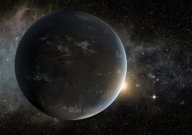
Earth-like planet more than just 'noise'
Mar 8, 2015Scientists have argued that a nearby Earth-like world dismissed as 'noise' is actually a real planet.
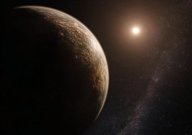
'Mirage planets' may complicate hunt for life
Feb 13, 2015Some extrasolar planets that appear to be habitable may have lost the capacity to support life long ago.
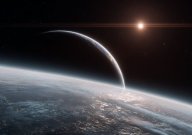
Average star may have two habitable worlds
Feb 7, 2015Scientists in Australia have determined that Earth-like planets are likely to be commonplace.
'Super Saturn' has gigantic ring system
Jan 30, 2015Astronomers have found a planet with rings over 200 times larger than those found around Saturn.
Five ancient rocky planets discovered
Jan 27, 2015A solar system dating back billions of years points to the likelihood that Earth-sized worlds are common.
New Earth-like extrasolar planet discovered
Jan 7, 2015The newly found Kepler 438b is being hailed by astronomers as the most Earth-like world ever found.
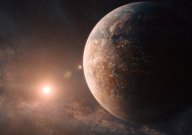
Kepler discovers new extrasolar planet
Dec 21, 2014NASA's Kepler space telescope has made its first discovery since being crippled by a technical fault.
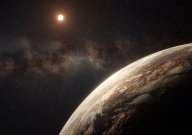
Twin of Uranus found in distant solar system
Oct 19, 2014Astronomers have identified the first ever ice giant planet beyond our own solar system.
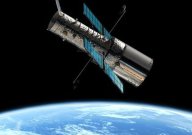
Water discovered in exoplanet's atmosphere
Sep 24, 2014Astronomers have found signs of water vapor on a planet located around 120 light years from Earth.
Twin planets could boost chance of alien life
Aug 10, 2014Extrasolar planets with a companion world tugging at them could remain habitable for much longer.
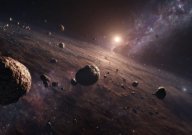
Exoplanet with longest year discovered
Jul 22, 2014Astronomers have identified an extrasolar planet that takes 708 days to complete one orbit of its star.
Are oceans mandatory for life to develop ?
Jul 21, 2014A new study has concluded that an exoplanet requires a liquid water ocean in order to sustain life.
New habitable extrasolar planet discovered
Jun 28, 2014Located 16 light years away, Gliese 832c has been identified as one of the best places to look for life.
Massive new space telescope planned
Jun 22, 2014The successor to the Hubble Space Telescope will be able to observe extrasolar planets like never before.
New way to detect alien life discovered
Jun 17, 2014The powerful new model can help detect life on extrasolar planets more effectively than ever before.
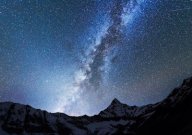
Milky Way has 100 million life-giving planets
Jun 9, 2014A group of astronomers has estimated the number of habitable planets in our galaxy for the first time.
Huge 'Godzilla of Earths' discovered
Jun 3, 2014Astronomers have identified a planet in a distant solar system that is 17 times the mass of the Earth.
Hunt for exoplanet ETs poses new challenge
May 2, 2014Finding signs of extraterrestrial life on an extrasolar planet is going to be a lot harder than expected.
Kepler discovers most Earth-like exoplanet
Apr 18, 2014Astronomers have located an Earth-sized world within the 'Goldilocks zone' of a distant solar system.
Possible exomoon candidate discovered
Apr 11, 2014Scientists have identified what could be a natural satellite orbiting a planet in another solar system.



News | Columns | Encyclopedia


UM 11.3 Unexplained-Mysteries.com (c) 2001-2026
Terms | Privacy Policy | Cookies | Contact