





Science & Technology
September 19, 2025


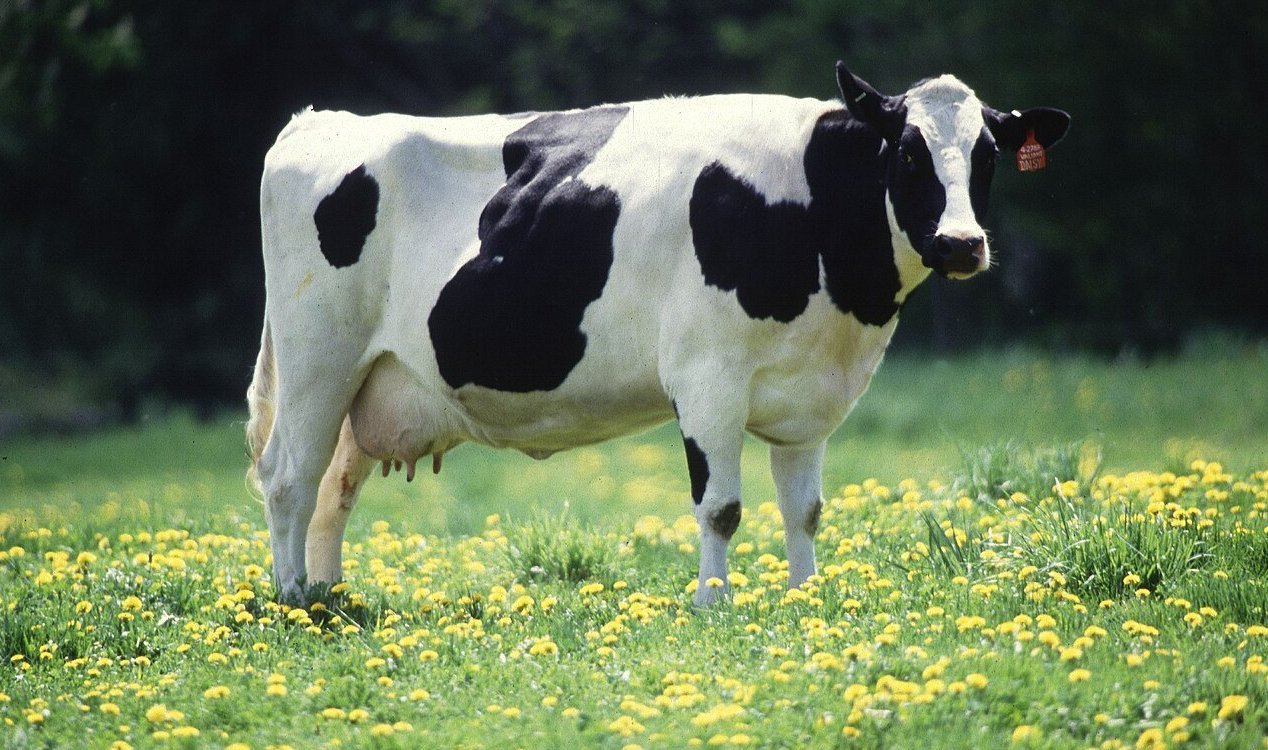
Image: Female Black and White Cow (illustrative)
Credit: Keith Weller / (PD) USDA
The winners are typically those who have engaged in research into strange, bizarre and often ludicrous ideas and concepts and this year's recipients are no exception.
By far the weirdest project to win this year came courtesy of a team from Japan who decided to find out if painting black-and-white zebra stripes on cows would reduce the amount of times they were bitten by flies.
Bizarrely, the researchers discovered that this was indeed the case, thus offering a novel, inexpensive and low-tech alternative to pesticides to help reduce the health issues caused by insect bites.
"We are deeply honoured to receive this award," said researcher Tomoki Kojima.
"This award serves as motivation for us to continue striving for excellence."
Elsewhere, researchers from the US and Israel won the chemistry award for their efforts to determine if adding teflon to food could help to bulk it out without increasing the amount of calories consumed.
The idea was that the material - which is typically used for non-stick coatings on pots and pans - would simply pass through the digestive system and out the other end.
While it seemed to work, actually convincing anyone to eat the teflon-infused food is likely to prove a lot more challenging.
You can check out the full awards show below.
Source: BBC News
Cows painted to look like zebras among 2025's Ig Nobel prize winners
By T.K. RandallSeptember 19, 2025
Image: Female Black and White Cow (illustrative)
Credit: Keith Weller / (PD) USDA
The annual prize is awarded to some of the weirdest and wackiest science projects around the world.
A parody of the better-known and more prestigious Nobel Prize, the Ig Nobel Prize seeks to offer recognition to those who have contributed to the world of science in more unusual ways.
The winners are typically those who have engaged in research into strange, bizarre and often ludicrous ideas and concepts and this year's recipients are no exception.
By far the weirdest project to win this year came courtesy of a team from Japan who decided to find out if painting black-and-white zebra stripes on cows would reduce the amount of times they were bitten by flies.
Bizarrely, the researchers discovered that this was indeed the case, thus offering a novel, inexpensive and low-tech alternative to pesticides to help reduce the health issues caused by insect bites.
"We are deeply honoured to receive this award," said researcher Tomoki Kojima.
Elsewhere, researchers from the US and Israel won the chemistry award for their efforts to determine if adding teflon to food could help to bulk it out without increasing the amount of calories consumed.
The idea was that the material - which is typically used for non-stick coatings on pots and pans - would simply pass through the digestive system and out the other end.
While it seemed to work, actually convincing anyone to eat the teflon-infused food is likely to prove a lot more challenging.
You can check out the full awards show below.
Source: BBC News
Similar stories based on this topic:


The Unexplained Mysteries
Book of Weird News
AVAILABLE NOW
Take a walk on the weird side with this compilation of some of the weirdest stories ever to grace the pages of a newspaper.
Click here to learn more

Support us on Patreon
BONUS CONTENTFor less than the cost of a cup of coffee, you can gain access to a wide range of exclusive perks including our popular 'Lost Ghost Stories' series.
Click here to learn more

1 week
2 weeks
3 weeks
1 month


This week
This month
All time
 |
1. | Pareidolia |
 |
2. | Loch Ness Monster |
|
3. | Orb |
|
4. | Area 51 |
|
5. | Bigfoot |
|
6. | Spirit Photography (Classic) |
|
7. | Unidentified Flying Object |
|
8. | Electronic Voice Phenomenon |
|
9. | Roswell Incident |
|
10. | Paranormal |


Top | Home | Forum
News | Columns | Encyclopedia


UM 11.3 Unexplained-Mysteries.com (c) 2001-2026
Terms | Privacy Policy | Cookies | Contact
News | Columns | Encyclopedia
UM 11.3 Unexplained-Mysteries.com (c) 2001-2026
Terms | Privacy Policy | Cookies | Contact