





Palaeontology
April 11, 2026


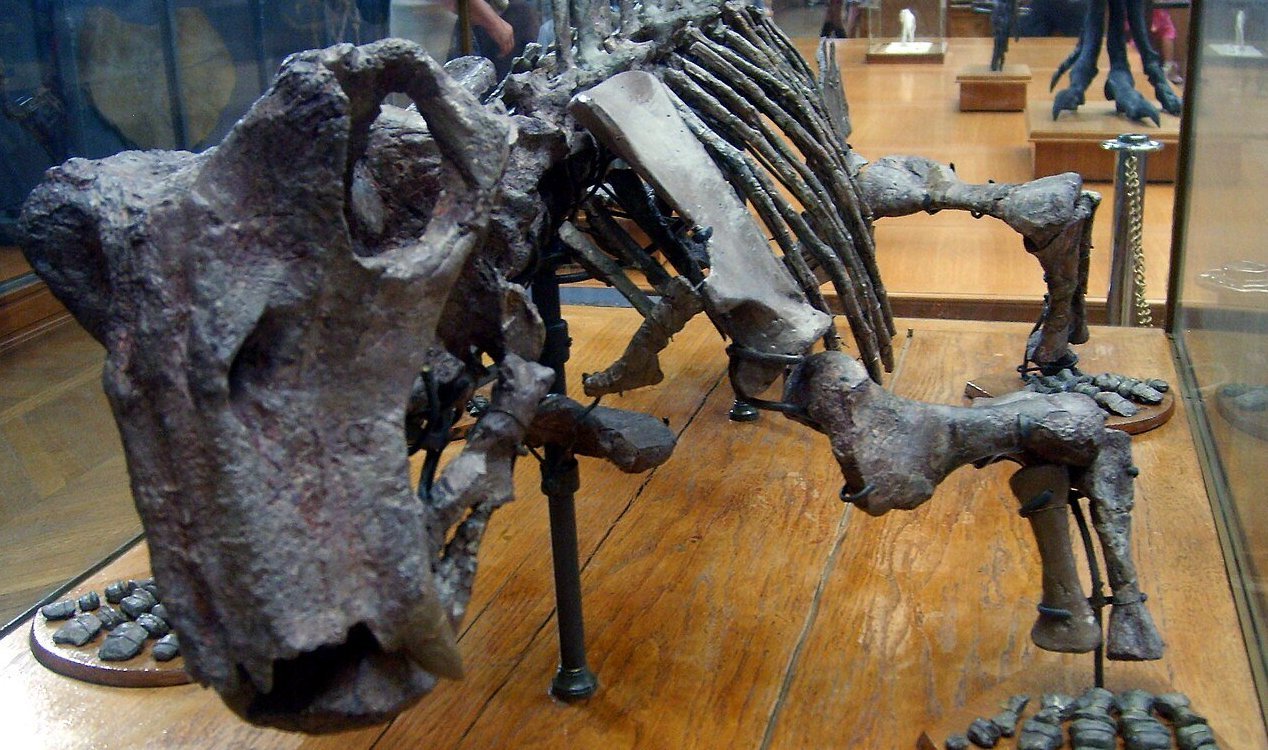
Image: Lystrosaurus Murrayi Skeleton (illustrative)
Credit: FunkMonk / CC BY-SA 3.0 (adapted)
Known as Lystrosaurus, this early plant-eating ancestor of modern mammals was remarkably resilient in an environment dominated by sweltering temperatures, frequent droughts and extreme weather cycles.
But there is something else about these animals that made them particularly intriguing to scientists and it is all to do with how they gave birth to their offspring.
Now, for the first time, scientists have identified a fossilized Lystrosaurus egg - proving once and for all that these early mammals laid eggs rather than giving birth to live young.
Such eggs are extremely rare due to being soft-shelled (and thus difficult to fossilize).
They were significantly larger than would be typically expected for such a small animal, a feature that may have made them more resilient to drying out in the hot, arid world in which the species lived.
The eggs also contained a relatively large amount of yolk, meaning that the embryo may have been able to develop independently without the mother needing to produce milk for it after birth.
"Understanding reproduction in mammal ancestors has been a long-lasting enigma and this fossil provides a key piece to this puzzle," said study co-author Dr. Vincent Fernandez.
"It was essential that we scanned the fossil just right to capture the level of detail needed to resolve such tiny, delicate bones."
Source: Phys.org
Prehistoric fossil discovery proves that early mammals laid eggs
By T.K. RandallApril 11, 2026
Image: Lystrosaurus Murrayi Skeleton (illustrative)
Credit: FunkMonk / CC BY-SA 3.0 (adapted)
The remarkable find shows that the distant ancestors of mammals laid eggs instead of giving birth to live young.
250 million years ago, just after one of the most catastrophic mass extinction events in the history of our planet, a small mammal managed to thrive in a world hostile to most other animal life.Known as Lystrosaurus, this early plant-eating ancestor of modern mammals was remarkably resilient in an environment dominated by sweltering temperatures, frequent droughts and extreme weather cycles.
But there is something else about these animals that made them particularly intriguing to scientists and it is all to do with how they gave birth to their offspring.
Now, for the first time, scientists have identified a fossilized Lystrosaurus egg - proving once and for all that these early mammals laid eggs rather than giving birth to live young.
They were significantly larger than would be typically expected for such a small animal, a feature that may have made them more resilient to drying out in the hot, arid world in which the species lived.
The eggs also contained a relatively large amount of yolk, meaning that the embryo may have been able to develop independently without the mother needing to produce milk for it after birth.
"Understanding reproduction in mammal ancestors has been a long-lasting enigma and this fossil provides a key piece to this puzzle," said study co-author Dr. Vincent Fernandez.
"It was essential that we scanned the fossil just right to capture the level of detail needed to resolve such tiny, delicate bones."
Source: Phys.org
Similar stories based on this topic:



The Unexplained Mysteries
Book of Weird News
AVAILABLE NOW
Take a walk on the weird side with this compilation of some of the weirdest stories ever to grace the pages of a newspaper.
Click here to learn more

Support us on Patreon
BONUS CONTENTFor less than the cost of a cup of coffee, you can gain access to a wide range of exclusive perks including our popular 'Lost Ghost Stories' series.
Click here to learn more

1 week
2 weeks
3 weeks
1 month


This week
This month
All time
 |
1. | Pareidolia |
 |
2. | Electronic Voice Phenomenon |
|
3. | Yeti |
|
4. | Paranormal |
|
5. | Loch Ness Monster |
| - | 6. | Orb |
|
7. | Area 51 |
|
8. | Spirit Photography (Classic) |
|
9. | Ghost |
|
10. | Storm Area 51 |


Top | Home | Forum
News | Columns | Encyclopedia


UM 11.3 Unexplained-Mysteries.com (c) 2001-2026
Terms | Privacy Policy | Cookies | Contact
News | Columns | Encyclopedia
UM 11.3 Unexplained-Mysteries.com (c) 2001-2026
Terms | Privacy Policy | Cookies | Contact