





Search results for: planets

World's biggest laser crushes diamond
Jul 18, 2014A giant laser has been used to simulate the pressures present within the cores of the gas giant planets.
Massive new space telescope planned
Jun 22, 2014The successor to the Hubble Space Telescope will be able to observe extrasolar planets like never before.
New way to detect alien life discovered
Jun 17, 2014The powerful new model can help detect life on extrasolar planets more effectively than ever before.

Researchers grow plants on alien materials
Jun 17, 2014The new discipline of 'astroecology' involves growing plants directly in extraterrestrial environments.
Milky Way has 100 million life-giving planets
Jun 9, 2014A group of astronomers has estimated the number of habitable planets in our galaxy for the first time.
Could genetics be the key to colonization ?
Mar 29, 2014Scientists may be able to alter our genes to make the human colonization of other planets more viable.
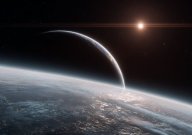
Almost every star hosts an alien planet
Mar 6, 2014Recent studies have revealed that extrasolar planets are extremely abundant throughout the universe.
NASA discovers 715 new extrasolar planets
Feb 27, 2014The record-breaking haul of newly discovered worlds comes courtesy of the Kepler Space Telescope.
Are some planets more habitable than Earth ?
Jan 25, 2014Astronomers seeking signs of alien life are on the lookout for 'superhabitable' extrasolar planets.
Hubble finds clouds on nearby alien worlds
Jan 3, 2014Astronomers using the Hubble telescope have picked up signs of cloud cover on two extrasolar planets.
'Super ball bots' to explore other planets
Dec 30, 2013NASA has developed a new type of landing apparatus that could make exploring other worlds much easier.
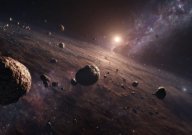
Where are the closest alien planets ?
Dec 28, 2013Astronomers believe that there could be an exoplanet orbiting a nearby pair of brown dwarf stars.
Hubble detects water on five exoplanets
Dec 5, 2013The Hubble Space Telescope has picked up signs of water in the atmospheres of several distant worlds.
1 in 5 stars orbited by habitable world
Nov 7, 2013Scientists believe that our universe is filled with far more habitable planets than previously thought.
Extrasolar planet tally reaches 1,000
Oct 23, 2013Since 1992 the number of planets discovered orbiting distant stars has been growing exponentially.
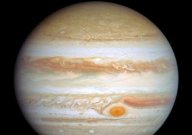
Diamond rain may fall on Jupiter and Saturn
Oct 10, 2013The two largest planets in our solar system may be home to diamond rain and liquid diamond oceans.
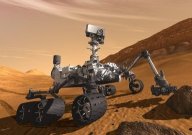
Space probe plutonium reserves running out
Sep 23, 2013The fuel needed to send space probes on missions to other planets could run out within ten years.
Alien moons may be too small to support life
Sep 17, 2013Astronomers believe that the moons around extrasolar planets may not be good candidates for life.



News | Columns | Encyclopedia


UM 11.3 Unexplained-Mysteries.com (c) 2001-2026
Terms | Privacy Policy | Cookies | Contact