





Search results for: scientist

'Ghost fish' spotted alive for the first time
VIDEO Jul 5, 2016Scientists have filmed an extremely rare type of fish more than 2,500ft below the surface of the sea.
China completes world's largest telescope
VIDEO Jul 4, 2016The massive 500-meter dish will be used to help scientists hunt for signs of extraterrestrial life.

Scientists are attempting to 'grow' drones
VIDEO Jul 3, 2016New research is aiming to chemically grow unmanned aerial drones to make them quicker to produce.
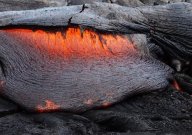
Scientists succeed in making their own lava
VIDEO Jun 29, 2016A team from the State University of New York at Buffalo created their own magma as part of an experiment.

Batman would be 'ill-equipped' say scientists
Jun 25, 2016Researchers at the University of Leicester have determined that Batman would be rubbish in real life.
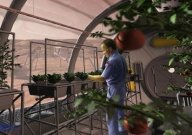
Vegetables grown on Mars should be edible
Jun 24, 2016Dutch scientists have replicated the soil on Mars to demonstrate that vegetables can be grown there.

Mozart lowers blood pressure, ABBA doesn't
Jun 23, 2016Scientists in Germany have been attempting to find out how music affects a listener's blood pressure.
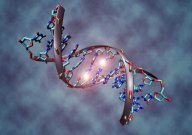
New study shows genes stay alive after death
Jun 22, 2016Scientists have found that some of your genes may continue to live for over 48 hours after you die.
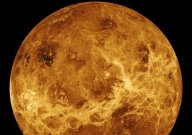
What happened to all the water on Venus ?
Jun 21, 2016Scientists have been investigating where all the water in the atmosphere of Venus disappeared to.
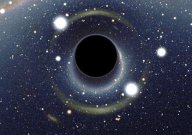
Gravitational waves detected a second time
VIDEO Jun 18, 2016Scientists have announced that they have picked up gravitational waves from two colliding black holes.

Hordes of spider crabs gather near Melbourne
VIDEO Jun 17, 2016An Australian aquatic scientist has captured footage of the crustaceans congregating in Port Phillip Bay.

Contact with ET could take over 1,500 years
Jun 16, 2016Scientists have calculated that it could be a long time indeed before we hear from intelligent aliens.
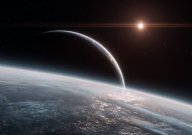
'10 planets or more' within our solar system
Jun 15, 2016A Cambridge scientist maintains that there may be far more planets in the solar system than we realize.
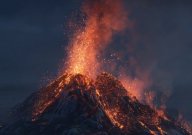
Volcanic lightning mystery has been solved
Jun 15, 2016Scientists have determined the processes which create spectacular lightning strikes during an eruption.

Scientists turn carbon dioxide into stone
Jun 12, 2016The breakthrough could offer up a new way to help curb the level of global carbon dioxide emissions.

US scientists to grow human organs in pigs
Jun 6, 2016It is hoped that the technique will help to solve the worldwide shortage of human organs for transplant.
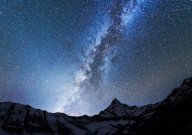
Milky Way has the mass of 700 billion suns
Jun 1, 2016Scientists have managed to calculate the mass using a new technique involving globular clusters.
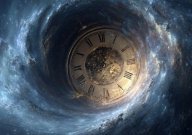
New optical clock is most accurate ever built
May 26, 2016Scientists have come up with a clock so accurate that it could even redefine the length of a second.
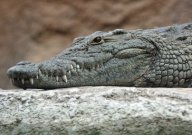
Man-eating Nile crocodiles found in Florida
May 22, 2016Using DNA testing, scientists have identified at least three of the deadly reptiles in Florida's swamps.

Hypersonic rocket could revolutionize travel
May 21, 2016US and Australian military scientists are working together on an ambitious high-speed aircraft concept.



News | Columns | Encyclopedia


UM 11.3 Unexplained-Mysteries.com (c) 2001-2026
Terms | Privacy Policy | Cookies | Contact