





Science & Technology
August 22, 2018


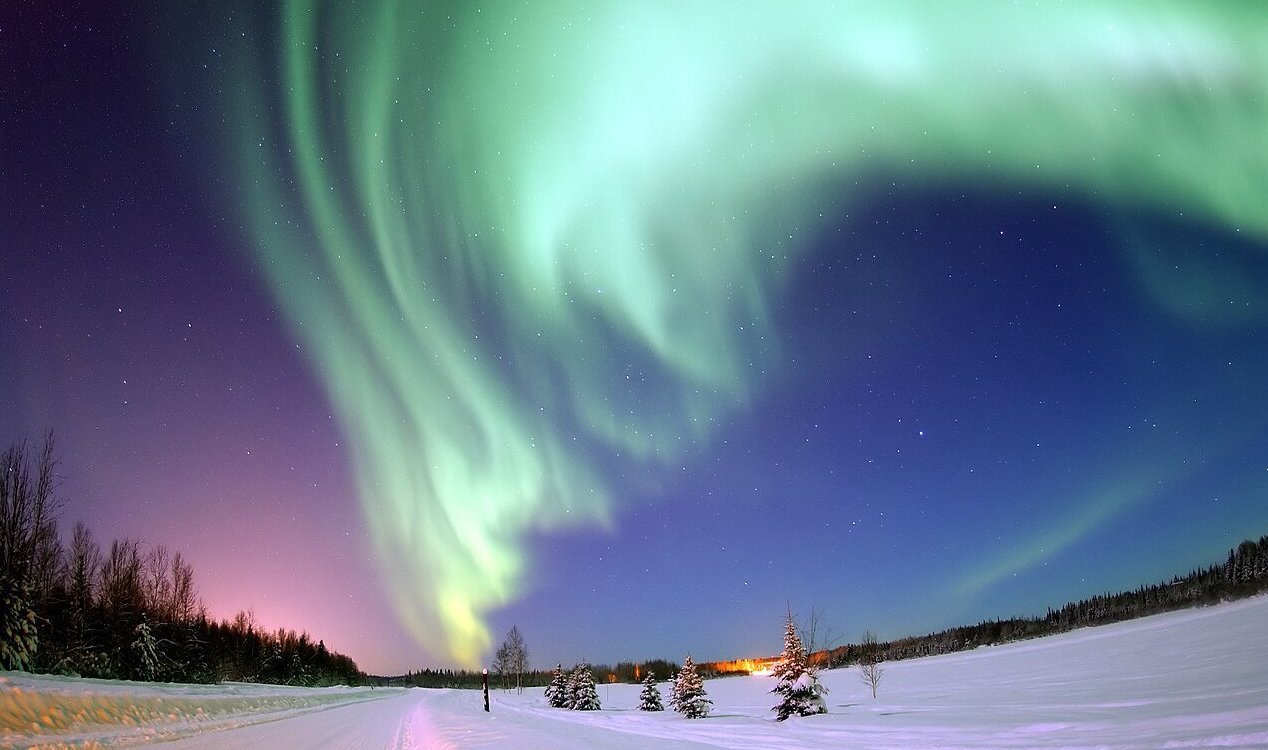
Image: Aurora Borealis
Credit: Senior Airman Joshua Strang / (PD) U.S. Air Force
Reaching temperatures of up to 10,800 degrees Fahrenheit ( the same as the Earth's core ), this peculiar phenomenon is 16 miles wide and thousands of miles long.
Now following an extensive new study in to the nature and origins of 'Steve', researchers have come to the conclusion that the phenomenon is 'completely unknown' to science.
"Our main conclusion is that 'Steve' is not an aurora," said physicist Bea Gallardo-Lacourt from the University of Calgary. "So right now, we know very little about it. And that's the cool thing."
Until more is known about the phenomenon, scientists have decided to keep the name 'Steve' but have changed it to the acronym 'Strong Thermal Emission Velocity Enhancement'.
Source: Live Science
Mystery sky glow 'Steve' is unknown to science
By T.K. RandallAugust 22, 2018
Image: Aurora Borealis
Credit: Senior Airman Joshua Strang / (PD) U.S. Air Force
A peculiar strip of glowing light spotted in the sky over Canada has left scientists scratching their heads.
Stretching from east to west, the peculiarly named 'Steve' was first picked up by members of Alberta Aurora Chasers, a Facebook group frequented by people looking to share information about the best places to photograph the Northern Lights.Reaching temperatures of up to 10,800 degrees Fahrenheit ( the same as the Earth's core ), this peculiar phenomenon is 16 miles wide and thousands of miles long.
"Our main conclusion is that 'Steve' is not an aurora," said physicist Bea Gallardo-Lacourt from the University of Calgary. "So right now, we know very little about it. And that's the cool thing."
Until more is known about the phenomenon, scientists have decided to keep the name 'Steve' but have changed it to the acronym 'Strong Thermal Emission Velocity Enhancement'.
Source: Live Science
Similar stories based on this topic:



The Unexplained Mysteries
Book of Weird News
AVAILABLE NOW
Take a walk on the weird side with this compilation of some of the weirdest stories ever to grace the pages of a newspaper.
Click here to learn more

Support us on Patreon
BONUS CONTENTFor less than the cost of a cup of coffee, you can gain access to a wide range of exclusive perks including our popular 'Lost Ghost Stories' series.
Click here to learn more

1 week
2 weeks
3 weeks
1 month


This week
This month
All time
 |
1. | Pareidolia |
 |
2. | Electronic Voice Phenomenon |
|
3. | Yeti |
|
4. | Paranormal |
|
5. | Orb |
|
6. | Loch Ness Monster |
|
7. | Area 51 |
|
8. | Spirit Photography (Classic) |
|
9. | Ghost |
|
10. | Storm Area 51 |


Top | Home | Forum
News | Columns | Encyclopedia


UM 11.3 Unexplained-Mysteries.com (c) 2001-2026
Terms | Privacy Policy | Cookies | Contact
News | Columns | Encyclopedia
UM 11.3 Unexplained-Mysteries.com (c) 2001-2026
Terms | Privacy Policy | Cookies | Contact