





Search results for: solar
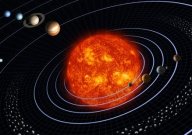
New moon discovered in our solar system
VIDEO Feb 21, 2019Scientists have successfully identified an entirely new moon in orbit around the gas giant Neptune.
Distant solar system object 'Farout' discovered
Dec 18, 2018Astronomers have identified the farthest known object in our solar system at a distance of 11 billion miles.

Closest ever photograph of the Sun revealed
Dec 14, 2018NASA's groundbreaking Parker Solar Probe has taken a close-up shot from inside the Sun's corona.
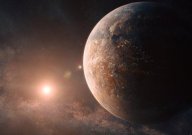
Second-closest extrasolar planet discovered
Nov 14, 2018Astronomers have revealed the discovery of a 'super-Earth' around a star that is a mere six light years away.
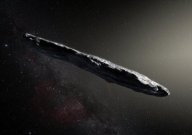
'Oumuamua may be an extraterrestrial solar sail
Nov 3, 2018Harvard astronomers have suggested that the first known interstellar visitor could be an alien probe.
Bizarre solar system is baffling astronomers
Oct 16, 2018Four gargantuan planets have been observed orbiting a relatively young star approximately 500 light years away.
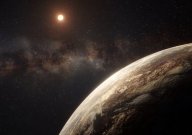
Neptune-sized extrasolar moon discovered
Oct 4, 2018Astronomers have found what is thought to be the first confirmed moon in orbit around an extrasolar world.

New dwarf planet 'The Goblin' discovered
Oct 2, 2018The important new find also hints at the presence of another, much larger planet in the outer solar system.
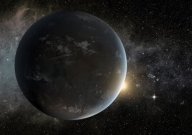
Planet-hunting probe finds two new candidates
Sep 23, 2018A mere two months after beginning operations, NASA's TESS spacecraft has found two new extrasolar worlds.

Observatory provides update on FBI closure
Sep 14, 2018The National Solar Observatory has posted an update on its Facebook page regarding the unusual situation.

FBI mysteriously evacuates space observatory
Sep 13, 2018The Sunspot Solar Observatory in New Mexico has been shut down by the FBI under mysterious circumstances.

Wind turbines could transform the Sahara
Sep 7, 2018In addition to generating huge amounts of energy, wind and solar power could turn the Sahara desert green.
Planet is so hot that even metal evaporates
Aug 16, 2018The extrasolar planet known as Kelt-9b is so hot that its atmosphere contains vaporized iron and titanium.
Parker Solar Probe has successfully launched
VIDEO Aug 12, 2018The probe, which is on a daring mission to the Sun, will become the fastest man-made object in history.
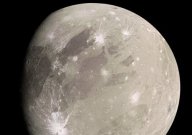
Ganymede generates powerful magnetic waves
Aug 8, 2018Jupiter's largest moon Ganymede is producing 'chorus waves' one million times more powerful than average.

Meteorite found in Africa is older than the Earth
Aug 7, 2018Scientists have been studying a meteorite that dates back to a time before the birth of our solar system.
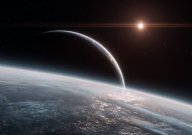
Rogue planet detected outside our solar system
Aug 4, 2018The huge object is 12.7 times the mass of Jupiter and has a magnetic field 200 times more powerful.
'Super-Earth' most likely candidate for life
Aug 2, 2018A large Earth-like world has emerged as the most likely place to look for life outside of our solar system.
New planet-hunting telescope begins search
VIDEO Jul 29, 2018NASA's Transiting Exoplanet Survey Satellite (TESS) is now on the hunt for habitable extrasolar worlds.
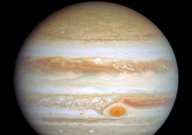
Twelve new moons discovered around Jupiter
Jul 17, 2018The discovery means that the gas giant has a total of 79 moons - more than any other planet in the solar system.



News | Columns | Encyclopedia


UM 11.3 Unexplained-Mysteries.com (c) 2001-2026
Terms | Privacy Policy | Cookies | Contact